
Flat Roof Ponding Water: Causes, Risks & Solutions
Ponding water is a drainage symptom that can indicate slope, blockage, membrane or edge-detail problems. It deserves investigation rather than a cosmetic patch.
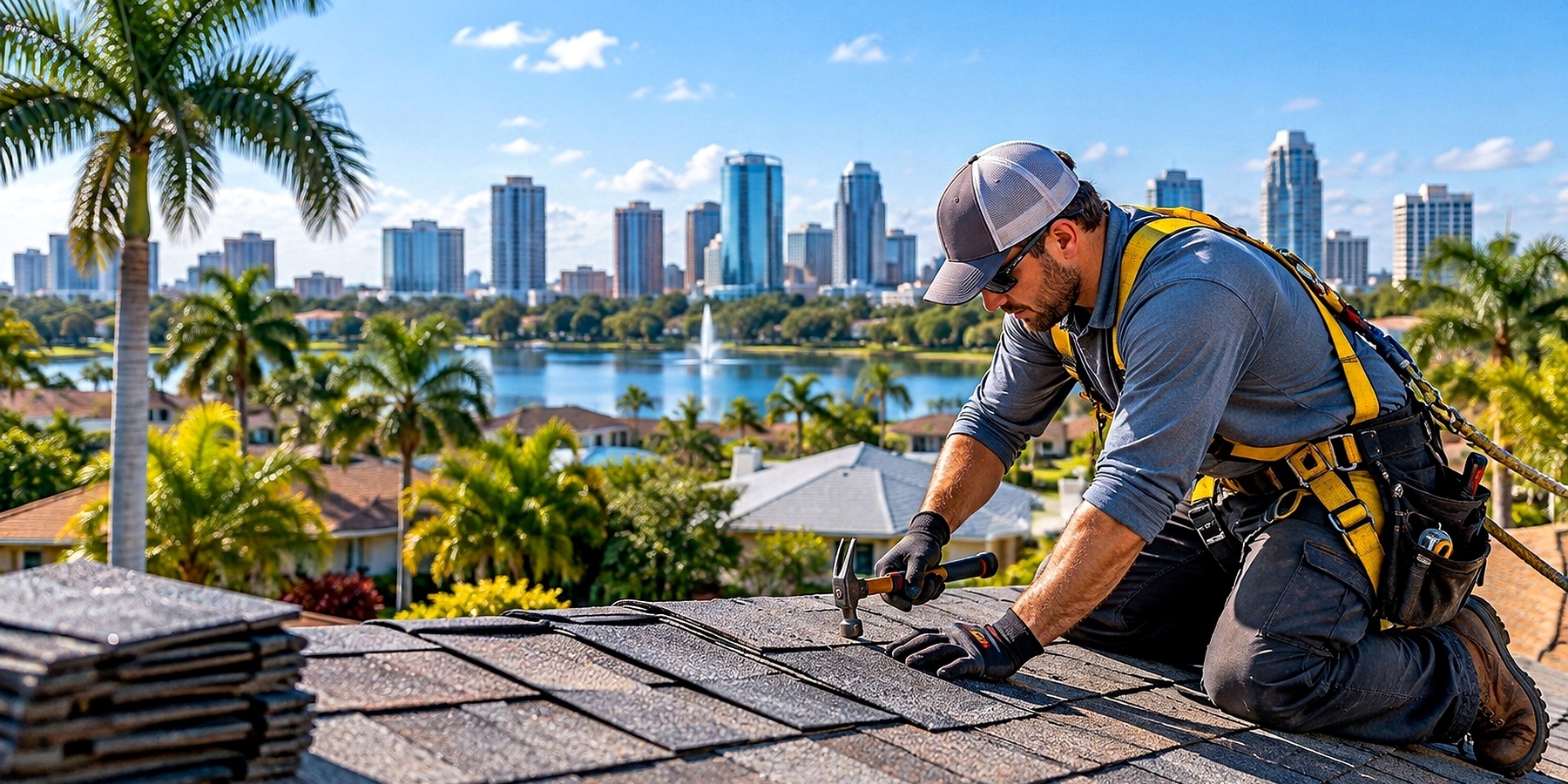
Ponding water is a drainage symptom that can indicate slope, blockage, membrane or edge-detail problems. It deserves investigation rather than a cosmetic patch.
For local homeowners, the useful approach is to connect the symptom to the roof component, explain the evidence that would confirm the diagnosis, and separate urgent action from long-term planning. This guide is written to help with that decision process.
Need local roofing help? Start with the Roof Repair Orlando FL homepage for Orlando roof repair services, emergency guidance and service-area information.
Short answer
Ponding is water still standing on a flat or low-slope roof roughly 48 hours after rain has ended. It is a drainage diagnosis, not a surface defect: the water is telling you the slope, drains or deck are not moving water off the roof. Causes include insufficient slope to drains, blocked or undersized drainage, sagging deck or insulation, and build-ups from previous repairs creating dams. The fix corrects the water path; coating or patching the pond treats the photograph, not the problem.
Why ponding gets worse, not better
Standing water is heavy, persistent and patient: it works at seams and laps continuously rather than only during rain, accelerates membrane deterioration, and finds pinhole defects that shedding water would never reach. Each repair layer added inside a pond raises the rim and deepens the pond, so roofs with a patching history often pond worse than the original. Algae and debris accumulate in the pond and hold moisture against the membrane between rains.
The assessment, through flat roof repair, maps where water stands, how deep, and why: drain locations and condition, slope direction, deck deflection under load, and the history written in previous patches. Drainage corrections range from clearing and repairing drains, to tapered insulation or crickets that re-establish slope, to correcting a sagging section, scoped from the map, not from a catalogue.
Ponding on commercial and residential roofs
The mechanics are identical, but commercial roofs add scale: larger fields, more penetrations and rooftop equipment, and interiors below where a slow pond leak damages stock or operations before it stains a ceiling. For those, commercial roof repair sequences the work: stop active leaks, correct the drainage defects, then decide on restoration options such as coating where the membrane is fundamentally sound.
Homeowners with a low-slope porch or addition roof should apply the same 48-hour rule: if the puddle outlasts two dry days, it is a drainage problem to correct, not a puddle to accept. The materials comparison in Orlando roofing materials explains where flat systems fit among Orlando's roof types.
Keep reading
Orlando roofing materials: shingle, tile, metal and flat · Fascia and soffit water damage: causes
Questions homeowners ask
How long is too long for water to stand on a flat roof?
The working rule across the industry is 48 hours after rain ends. Occasional shallow water that dries within a day or two is a watch item; persistent ponds are a drainage defect to correct.
Can a coating fix ponding?
No: coating a pond preserves the pond. Coatings can restore a sound membrane's surface, but drainage geometry has to be fixed first, and coating over a ponding area without correcting slope is a short-lived spend.
Is ponding an emergency?
Not usually an emergency, but it is not cosmetic either. It shortens membrane life and guarantees eventual leaks; it belongs on a planned correction schedule rather than an ignore list.
Before & After Repair Scenarios
These visuals are illustrative examples of common repair scopes, not representations of a specific customer job. Replace them with verified project photography when available.
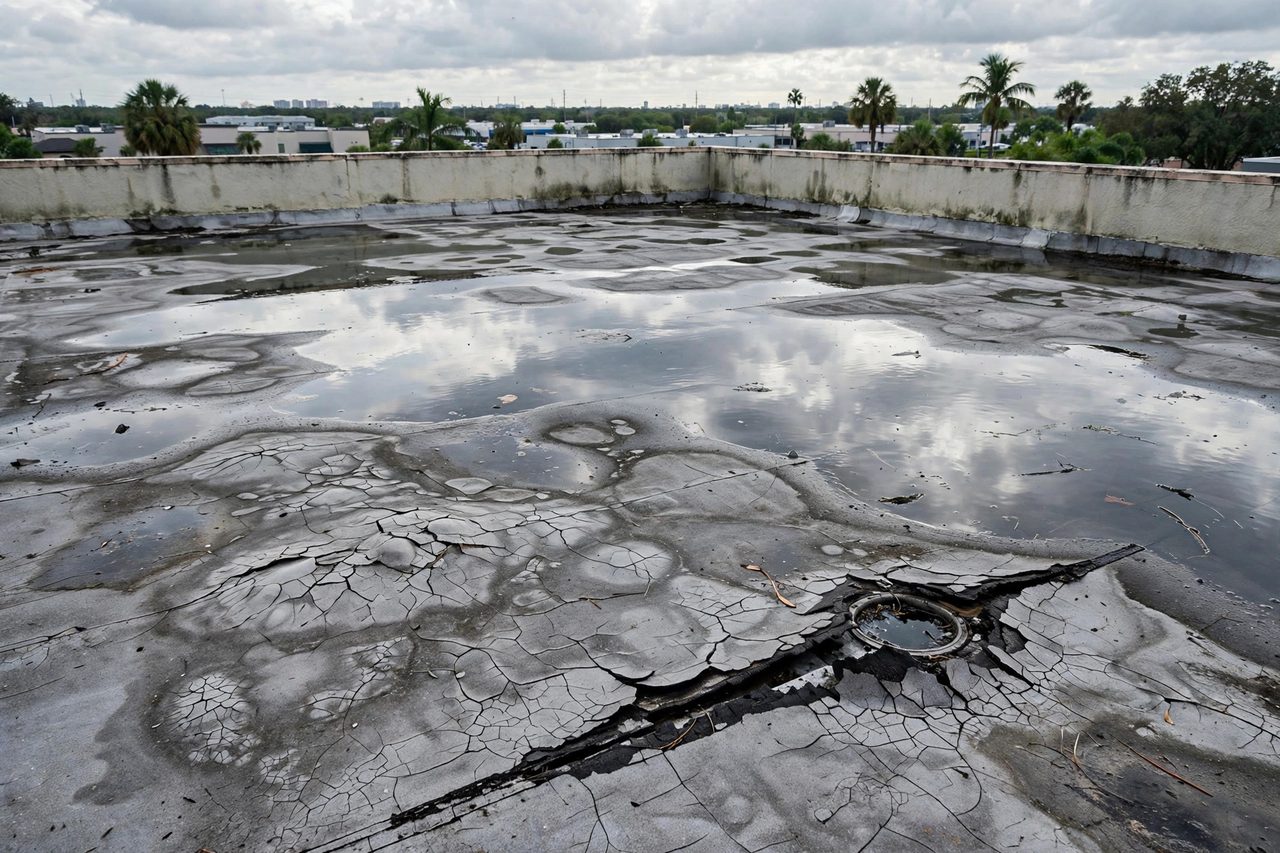
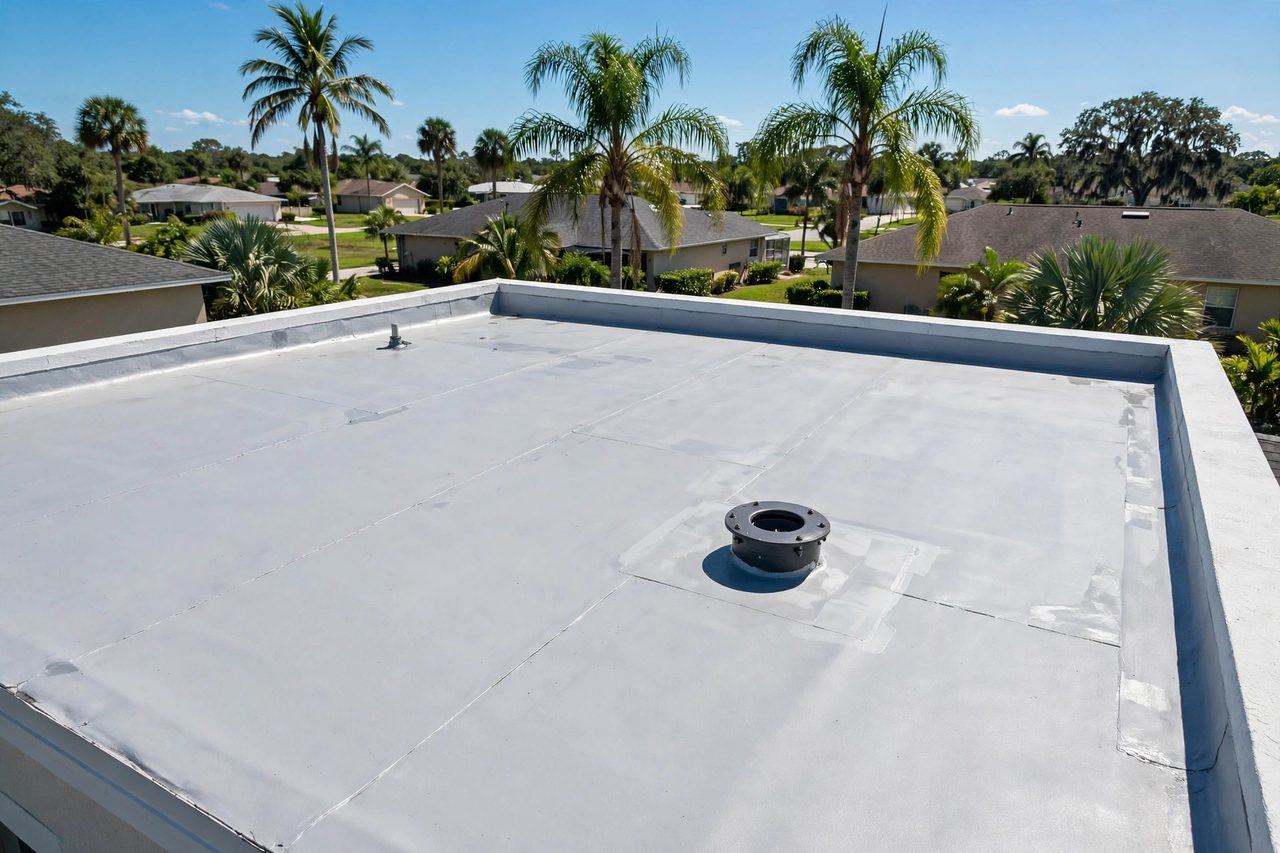
Localized Roof Leak Repair
Typical scope: identify the entry point, repair the failed component, restore surrounding materials and document the completed repair.
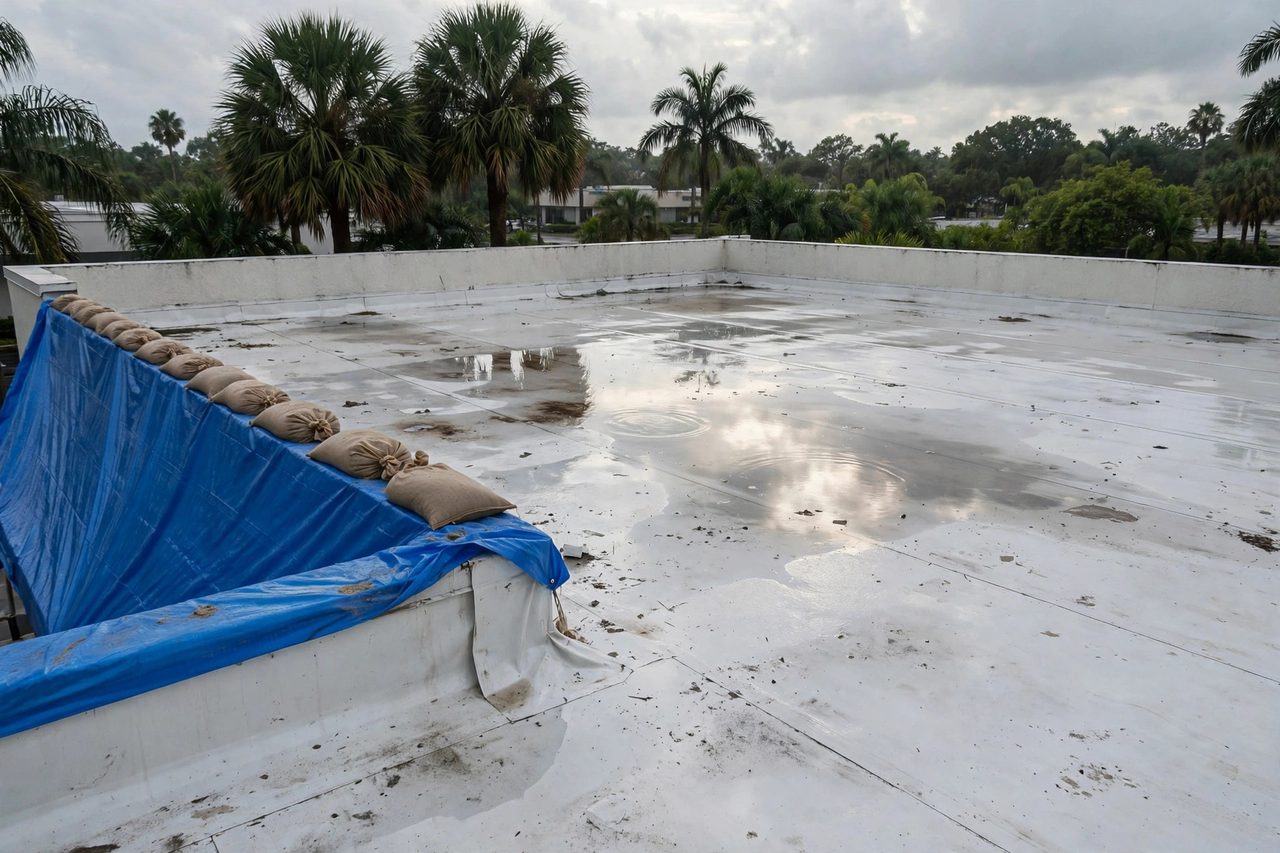
Storm Damage Stabilization
Typical scope: inspect wind or impact damage, protect exposed areas and separate urgent stabilization from permanent repairs.
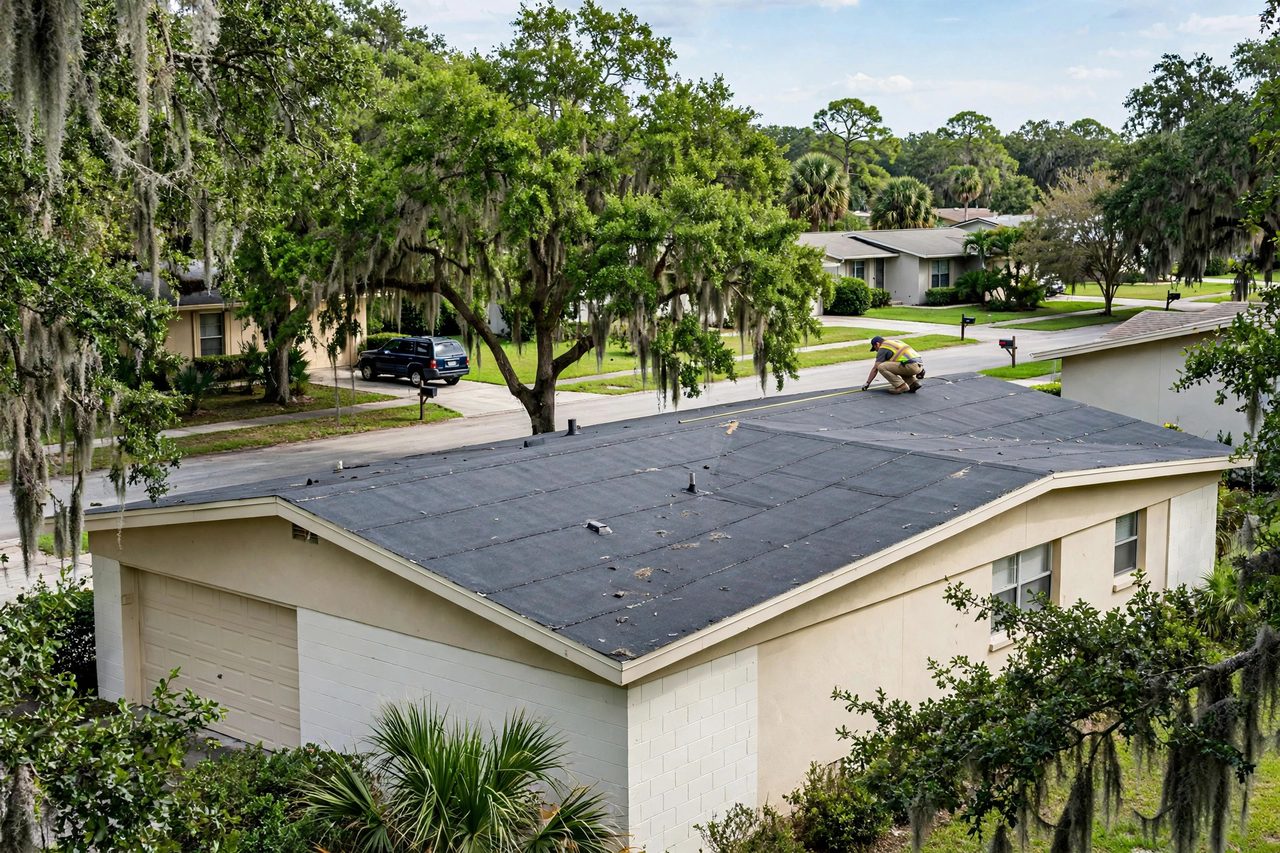
Roof Condition Assessment
Typical scope: inspect coverings, flashing, penetrations, drainage and visible moisture evidence before deciding what needs attention.
Image files include Orlando GPS metadata for local image organization; geotagging does not mean the scene was photographed at the listed map point.
What causes ponding water on a flat roof?
Ponding usually comes from low spots in the deck, sagging insulation, clogged or undersized drains, and debris dams near scuppers. Orlando's heavy summer rain exposes weak drainage quickly. Over time, the weight of standing water deepens the low spot, so a small drainage problem tends to grow rather than correct itself without work.
Can ponding water damage a flat roof even if it is not leaking yet?
Yes. Standing water adds constant weight, works at seams and flashing, and keeps the membrane wet far longer than it was designed for. Under Florida sun, ponded areas also collect dirt and algae that break down coatings faster. A roof can look sound from inside while the ponding area quietly shortens the life of the system above it.
How is ponding water on a flat roof usually fixed?
The fix depends on the cause, so the first step is mapping where water still sits 48 hours after rain. Options can include clearing or resizing drains, adding tapered insulation to rebuild slope, repairing sagging deck areas, or recoating once drainage is corrected. Coating over an active low spot without fixing the slope rarely solves the problem for long.
What Customers Have Shared
Customer feedback shown here is based on material already published by the business website. Use the Google Maps listing for the latest independently hosted review information.
“Showed up on time, and left the site cleaner than they found it.”
Published on the business website as customer feedback. See the live listing for additional review information.
View Google Maps Listing Leave a Google ReviewHow to evaluate a roofing contractor
Before authorizing work, compare the diagnosis, written scope, insurance documentation, applicable permits and contractor credentials. Ask which parts of the roof were inspected, what evidence supports the repair recommendation, and what documentation you will receive.
Need help with an active roofing problem?
Use this guide to understand the issue, then call to discuss the property and urgency.