
How Often Should a Florida Roof Be Inspected?
Inspection frequency depends on roof condition, material, weather exposure, age and recent events. Florida owners often have a strong reason to inspect after severe weather and before bigger problems become expensive.

Inspection frequency depends on roof condition, material, weather exposure, age and recent events. Florida owners often have a strong reason to inspect after severe weather and before bigger problems become expensive.
For local homeowners, the useful approach is to connect the symptom to the roof component, explain the evidence that would confirm the diagnosis, and separate urgent action from long-term planning. This guide is written to help with that decision process.
Need local roofing help? Start with the Roof Repair Orlando FL homepage for Orlando roof repair services, emergency guidance and service-area information.
Short answer
A sensible Florida rhythm is a professional inspection every one to two years for roofs in good condition, annually as a roof ages or after any season with a major storm, and event-driven inspections after hurricanes, tree strikes or new leaks. The logic is component life: the parts that fail first (boots, sealants, flashing, edges) age on a shorter clock than the covering, and inspection catches them in the cheap phase. Between professional visits, homeowner ground checks after storms cover the obvious changes.
Why Florida compresses the schedule
In cooler, drier climates a two-to-three-year rhythm can be defensible because components age slowly. Florida's sun, heat and rain compress component life: sealant joints dry and crack, boot rubber splits, and driven rain tests every weakness annually rather than occasionally. The inspection interval should match the fastest-ageing parts of the system, not the slowest, which is why Florida guidance clusters around annual-to-biennial professional checks for most homes.
Event triggers override the calendar: any storm strong enough to lift material, any fallen-tree contact, and any new interior stain each justify an inspection out of cycle. The service route is roof inspection; what to expect from the visit and its written report is covered there.
What self-checks can and cannot do
Homeowner checks, ground-level scans for displaced material, gutter overflow during rain, attic-hatch looks for trails and damp insulation, are genuinely valuable between professional visits, and the maintenance checklist organises them. They cannot substitute for roof-level component checks: boot cracks, lifted seals and flashing corrosion are invisible from the ground, and climbing to find them trades a small saving for a real fall risk.
Before a purchase, the calculus changes entirely: a one-time deep inspection is due diligence, covered in roof inspection before buying a home.
Keep reading
Roof maintenance checklist for Orlando homes · Roof inspection before buying a home
Questions homeowners ask
Does an annual inspection mean annual repairs?
No: most inspections on sound roofs produce short maintenance lists or none. The point is catching component failures while they are still small line items rather than interior damage.
My roof is new. When should its first inspection be?
A baseline check after the first storm season is sensible, then the standard rhythm. Early inspections also document the as-built condition, which is valuable if warranty questions ever arise.
Will an inspection tell me exactly how many years my roof has left?
It gives a condition-based estimate, not a certified number. Any exact lifespan promise exceeds what inspection evidence can support.
Before & After Repair Scenarios
These visuals are illustrative examples of common repair scopes, not representations of a specific customer job. Replace them with verified project photography when available.
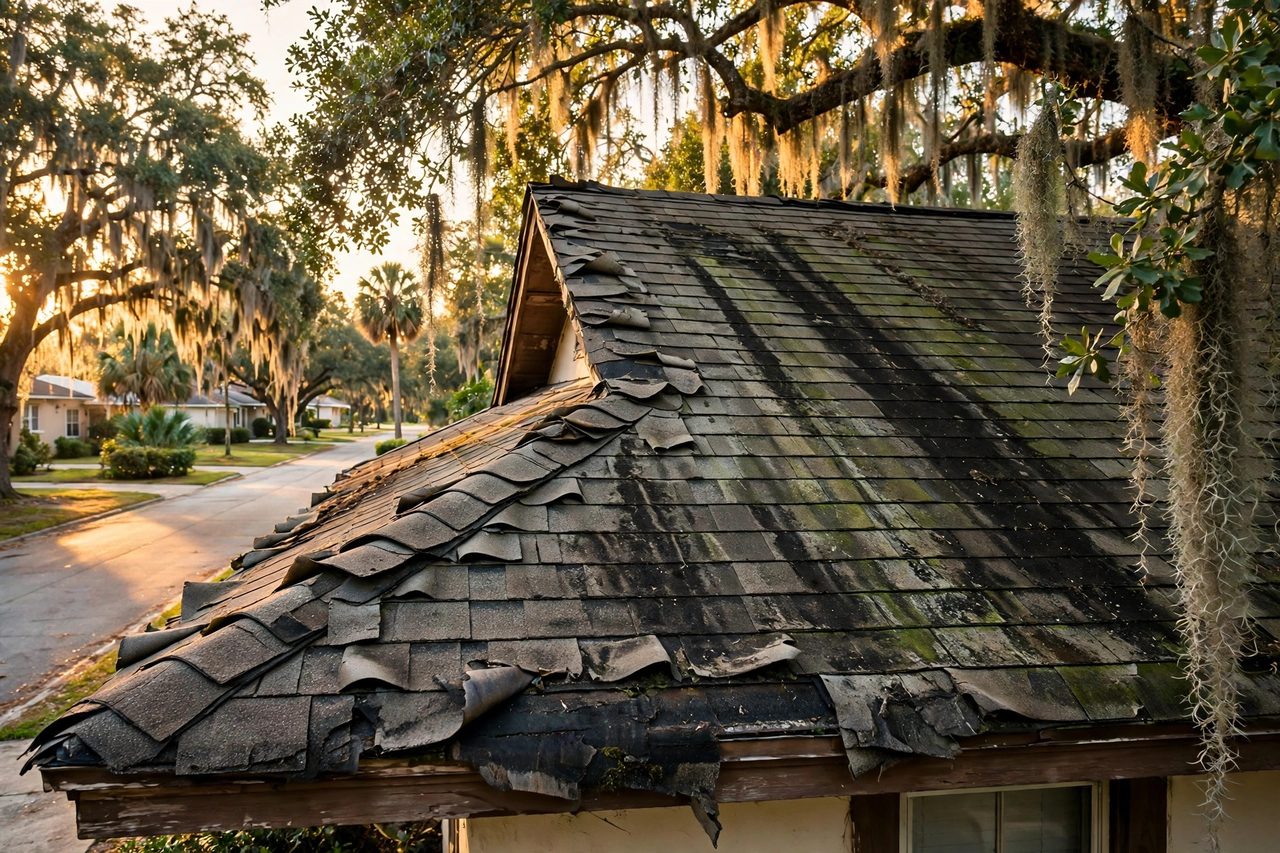

Localized Roof Leak Repair
Typical scope: identify the entry point, repair the failed component, restore surrounding materials and document the completed repair.
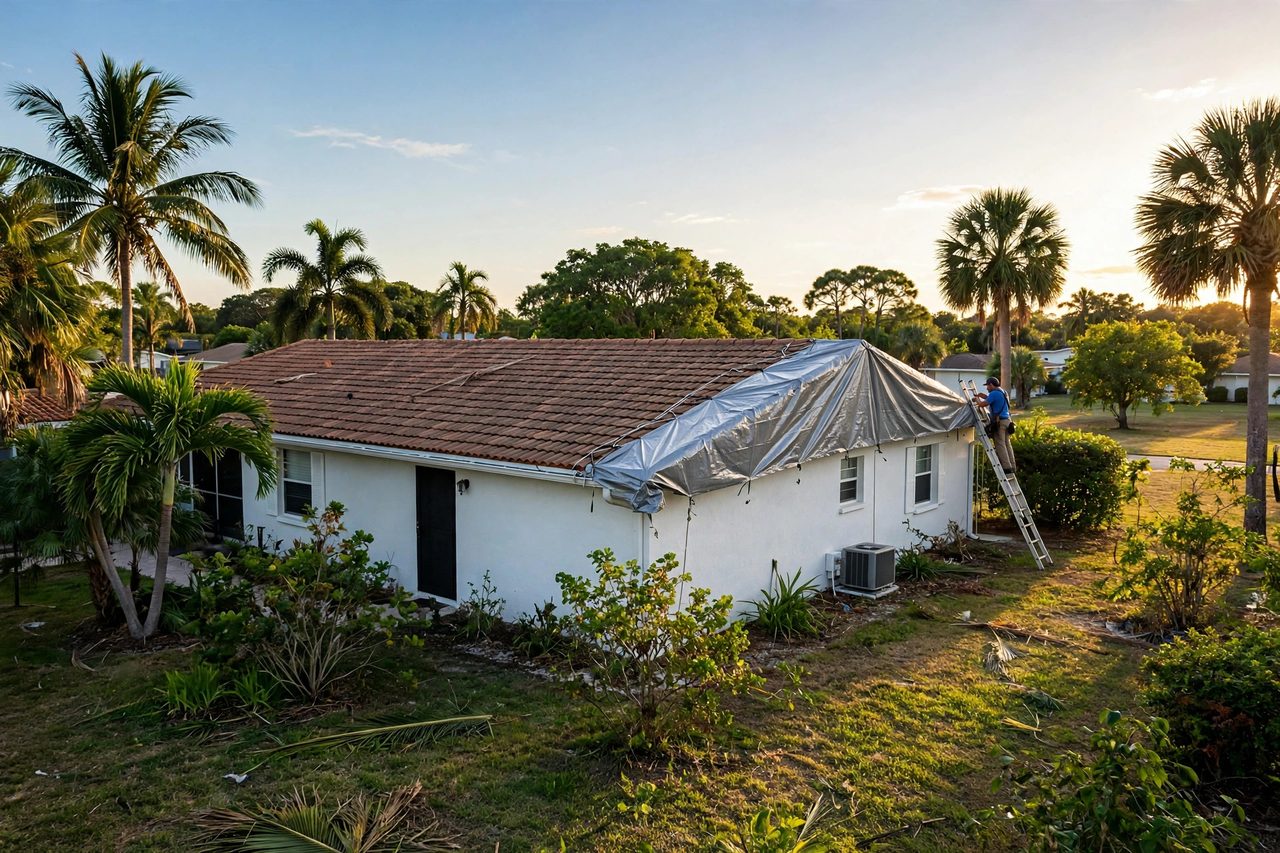
Storm Damage Stabilization
Typical scope: inspect wind or impact damage, protect exposed areas and separate urgent stabilization from permanent repairs.
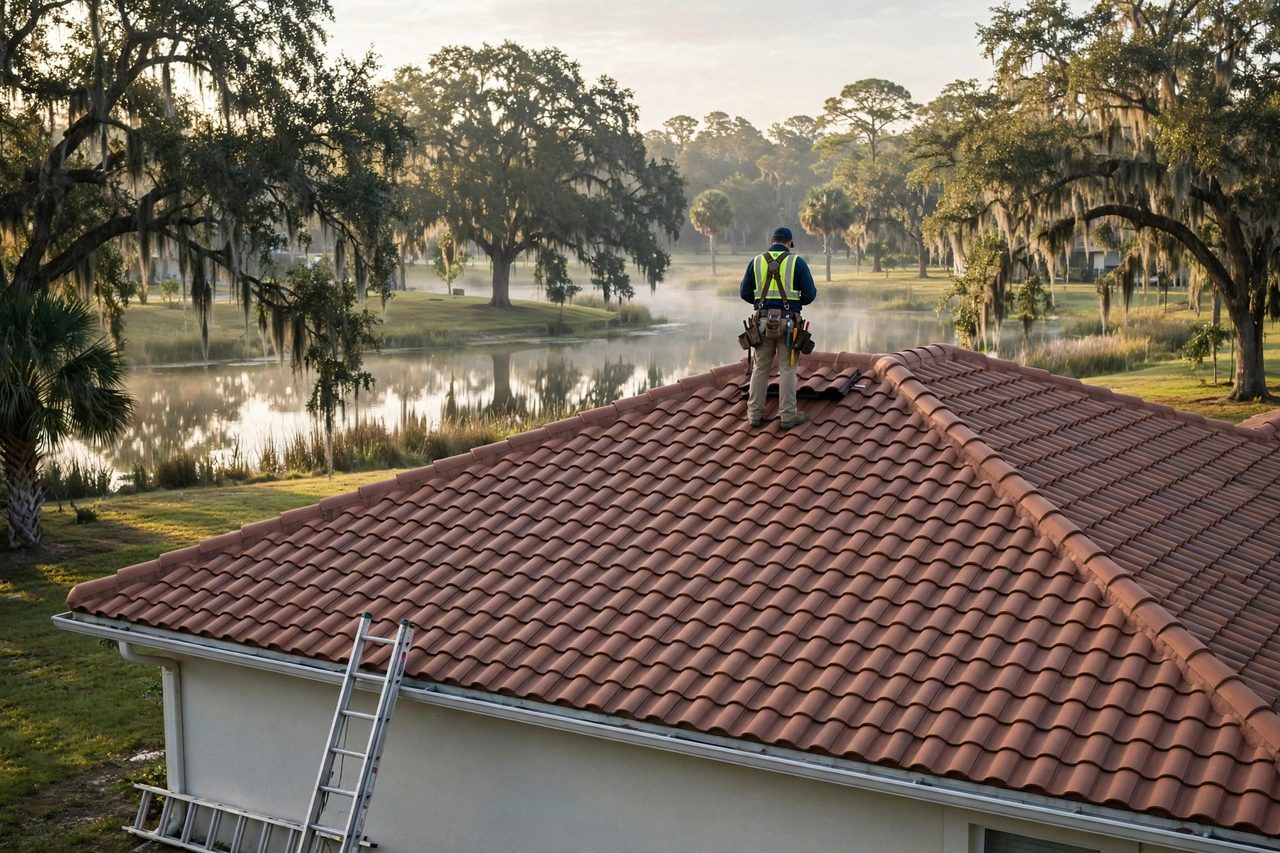
Roof Condition Assessment
Typical scope: inspect coverings, flashing, penetrations, drainage and visible moisture evidence before deciding what needs attention.
Image files include Orlando GPS metadata for local image organization; geotagging does not mean the scene was photographed at the listed map point.
Should I get a roof inspection after every major storm in Florida?
A professional check after any storm that brought damaging wind or driven rain is a sensible step in Florida, even when nothing looks wrong from the ground. Lifted shingles, cracked tile and loosened flashing often stay hidden until the next rain. Documenting the roof's condition soon after a storm also supports any insurance conversation while details are still fresh.
What does a professional roof inspection actually include?
A proper inspection looks at the roof surface, flashing, vents and penetrations, plus the attic for stains, moisture and ventilation problems. The roofer notes remaining wear, prior repair quality and whatever the Florida climate is attacking fastest. You should receive clear findings you can keep, which also helps when insurers or buyers ask about roof condition.
Do Florida insurers care about roof inspections?
Yes. Florida insurers pay close attention to roof age and condition, and some request documentation when a policy is written or renewed. A recent inspection report showing a sound, maintained roof can support that process, while undocumented problems often surface at the worst possible time. Keeping dated inspection records is one of the simplest protections a homeowner has.
What Customers Have Shared
Customer feedback shown here is based on material already published by the business website. Use the Google Maps listing for the latest independently hosted review information.
“Showed up on time, and left the site cleaner than they found it.”
Published on the business website as customer feedback. See the live listing for additional review information.
View Google Maps Listing Leave a Google ReviewHow to evaluate a roofing contractor
Before authorizing work, compare the diagnosis, written scope, insurance documentation, applicable permits and contractor credentials. Ask which parts of the roof were inspected, what evidence supports the repair recommendation, and what documentation you will receive.
Need help with an active roofing problem?
Use this guide to understand the issue, then call to discuss the property and urgency.