
Roof Maintenance Checklist for Orlando Homes
A useful maintenance checklist focuses on components that commonly fail: roof coverings, flashing, penetrations, drainage, roof edges and visible moisture evidence.
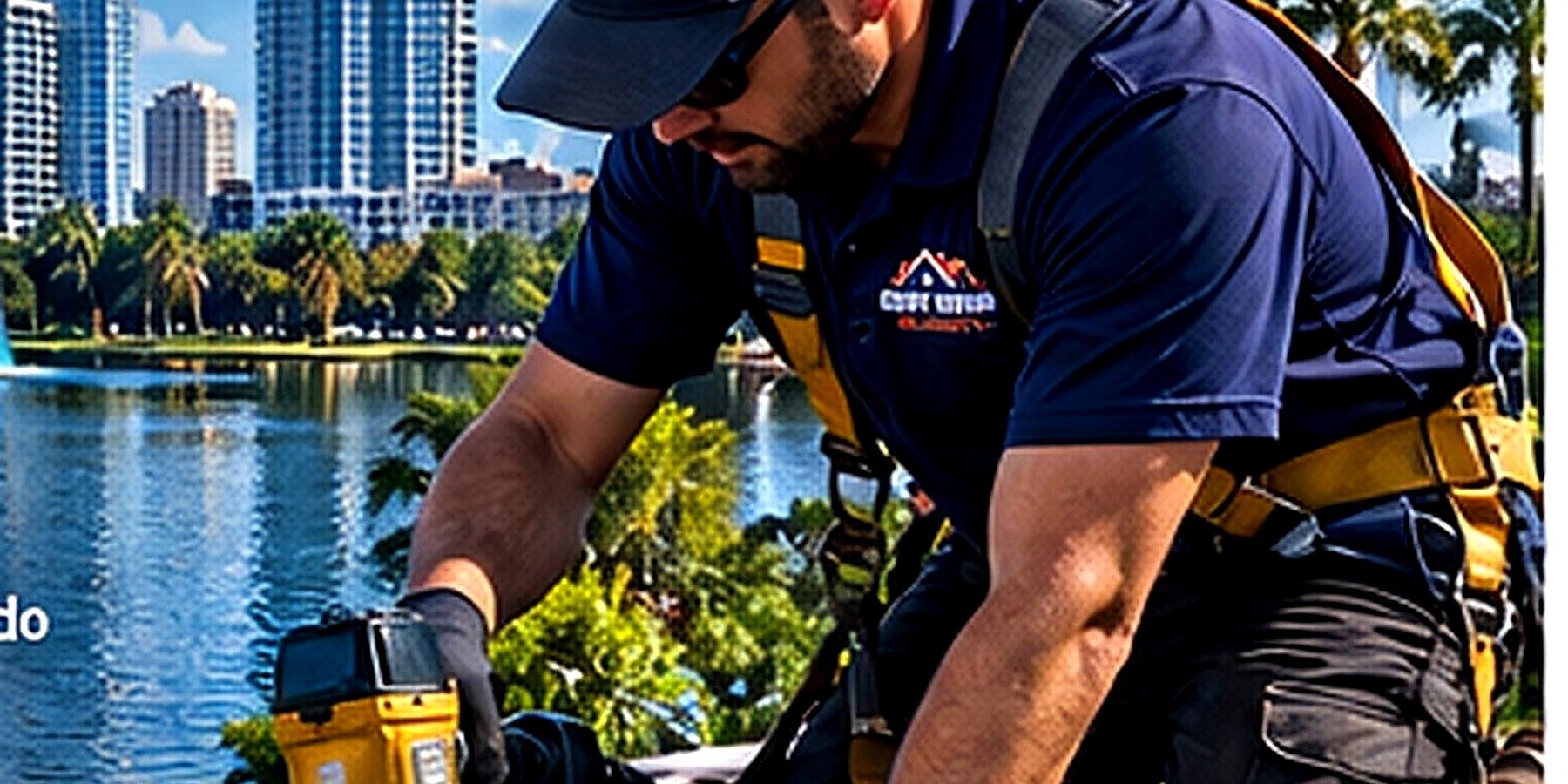
A useful maintenance checklist focuses on components that commonly fail: roof coverings, flashing, penetrations, drainage, roof edges and visible moisture evidence.
For local homeowners, the useful approach is to connect the symptom to the roof component, explain the evidence that would confirm the diagnosis, and separate urgent action from long-term planning. This guide is written to help with that decision process.
Need local roofing help? Start with the Roof Repair Orlando FL homepage for Orlando roof repair services, emergency guidance and service-area information.
Short answer
Orlando roof maintenance is a short list done on rhythm: keep gutters, valleys and drains clear; watch edges, seals and boots for the ageing Florida sun causes; check the attic for trails after heavy rain; trim branches back from the roof; and book professional inspections on the cycle described in our inspection-frequency guide. Everything on the homeowner list is ground-level or attic-hatch work, the moment a task needs the roof surface itself, it stops being homeowner maintenance.
The homeowner checklist (safe, ground-level)
After heavy rain: walk the perimeter, look for material in the yard, overflowing or sagging gutters, new stains on soffits, and water still standing on low-slope sections two days later. Monthly in leaf season: clear visible valley and gutter debris from the ground where reachable without a ladder on the roof edge; note what you cannot reach for the professional visit. Twice a year: attic-hatch check with a torch, trails, damp insulation, daylight at penetrations; and a binocular scan of ridges, hips and edges for displaced pieces. Annually: tree check, branches within striking or scraping distance go on a tree professional's list before storm season.
This rhythm prevents the specific Orlando failures: drainage blockages that soak edges (see fascia and soffit water damage), debris dams in valleys, and undetected storm displacement. It also builds the dated photo habit that supports everything from maintenance planning to insurance files.
The professional list (do not DIY)
Roof-surface work, resealing boots and flashings, replacing cracked tiles or shingles, clearing debris from the roof itself, any coating or sealing, involves height, fragile surfaces (tile especially breaks underfoot) and the risk of voiding correct layering with a well-meant patch. These belong to the professional rhythm: roof inspections to find them and the relevant repair services to fix them. Maintenance services and inspection findings should arrive in writing, with photos, so next year's visit can compare rather than restart.
If your checks turn up active water entry at any point, leave the checklist and go to what to do when your roof is leaking.
Keep reading
How often should a Florida roof be inspected? · Fascia and soffit water damage: causes
Questions homeowners ask
How often should gutters be cleared in Orlando?
As often as your tree cover dictates: the test is overflow during rain, not the calendar. Homes under heavy canopy may need several clearances a year; open lots far fewer.
Can I pressure-wash my roof as maintenance?
It is generally a bad idea: pressure strips granules from shingles, damages tile surfaces and forces water under laps. Cleaning, where needed, is a professional low-pressure decision, not a driveway habit.
What is the one maintenance item owners skip most?
The attic check. It takes minutes, needs no ladder to the roof, and catches active leaks months before they stain a ceiling, yet most owners only look after a drip appears.
Before & After Repair Scenarios
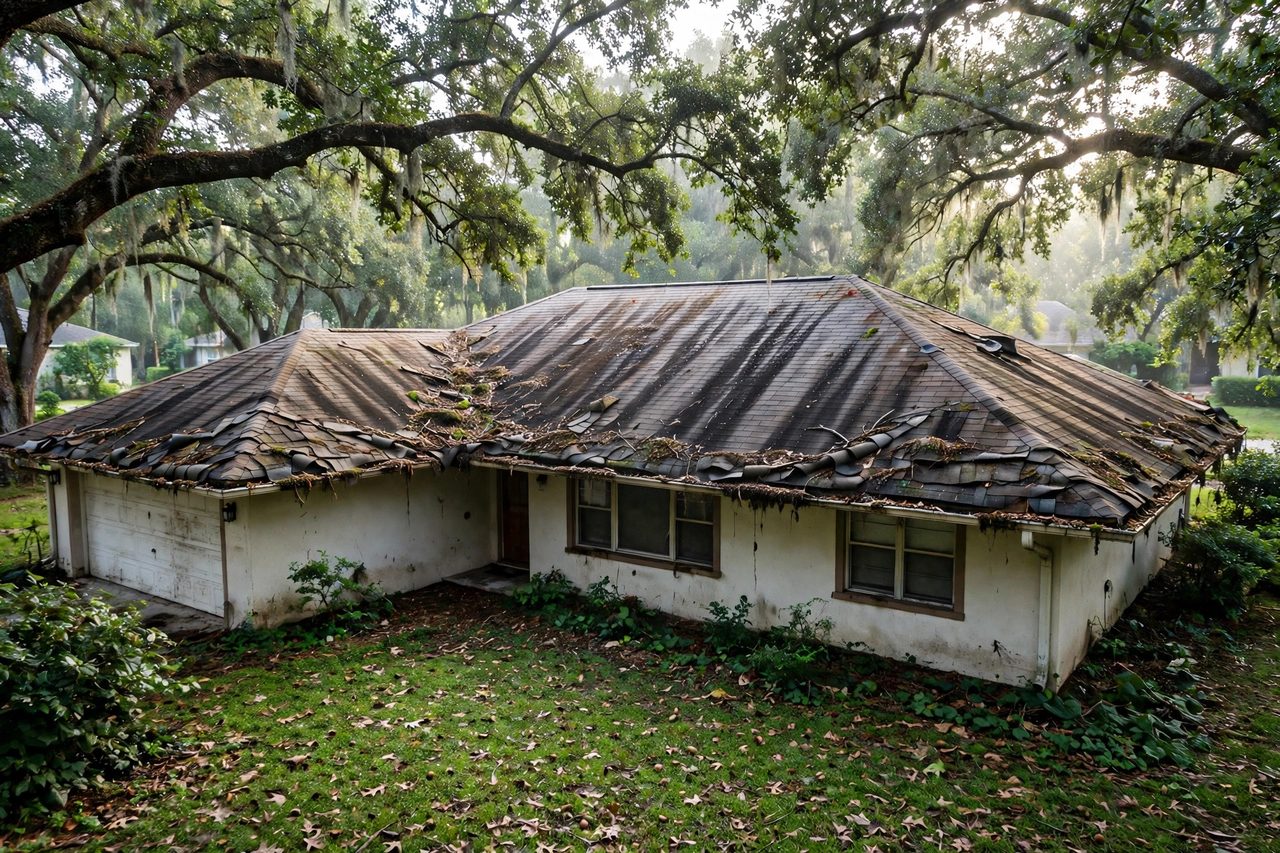
These visuals are illustrative examples of common repair scopes, not representations of a specific customer job. Replace them with verified project photography when available.
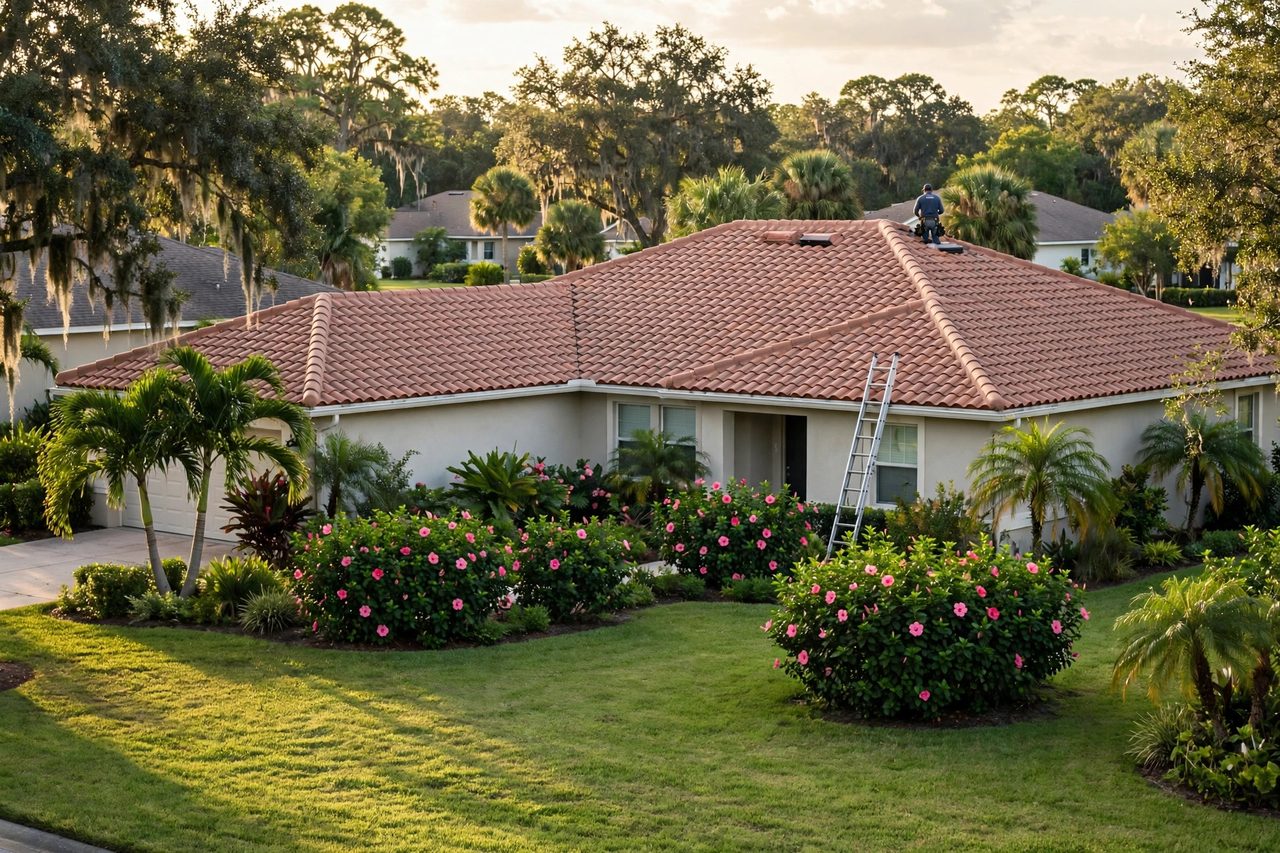
Localized Roof Leak Repair
Typical scope: identify the entry point, repair the failed component, restore surrounding materials and document the completed repair.
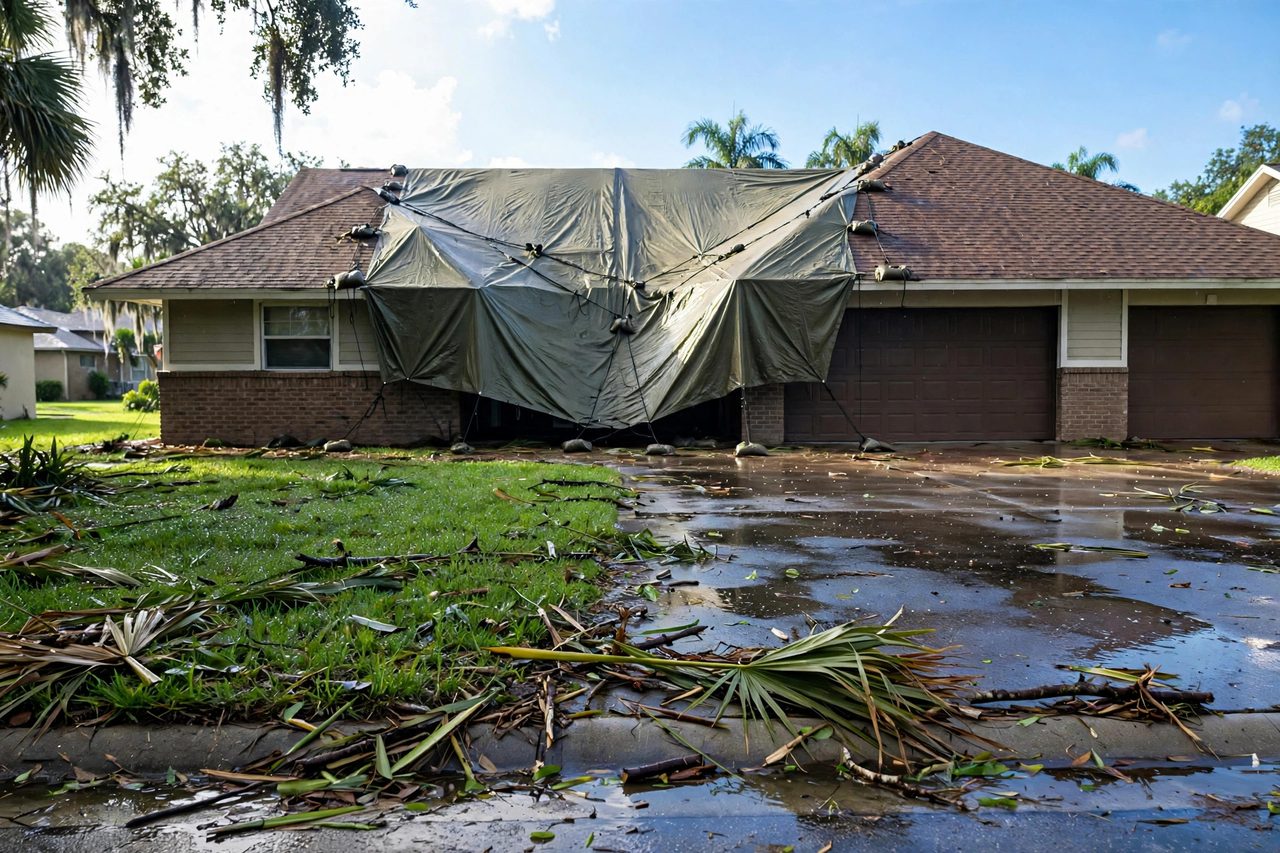
Storm Damage Stabilization
Typical scope: inspect wind or impact damage, protect exposed areas and separate urgent stabilization from permanent repairs.
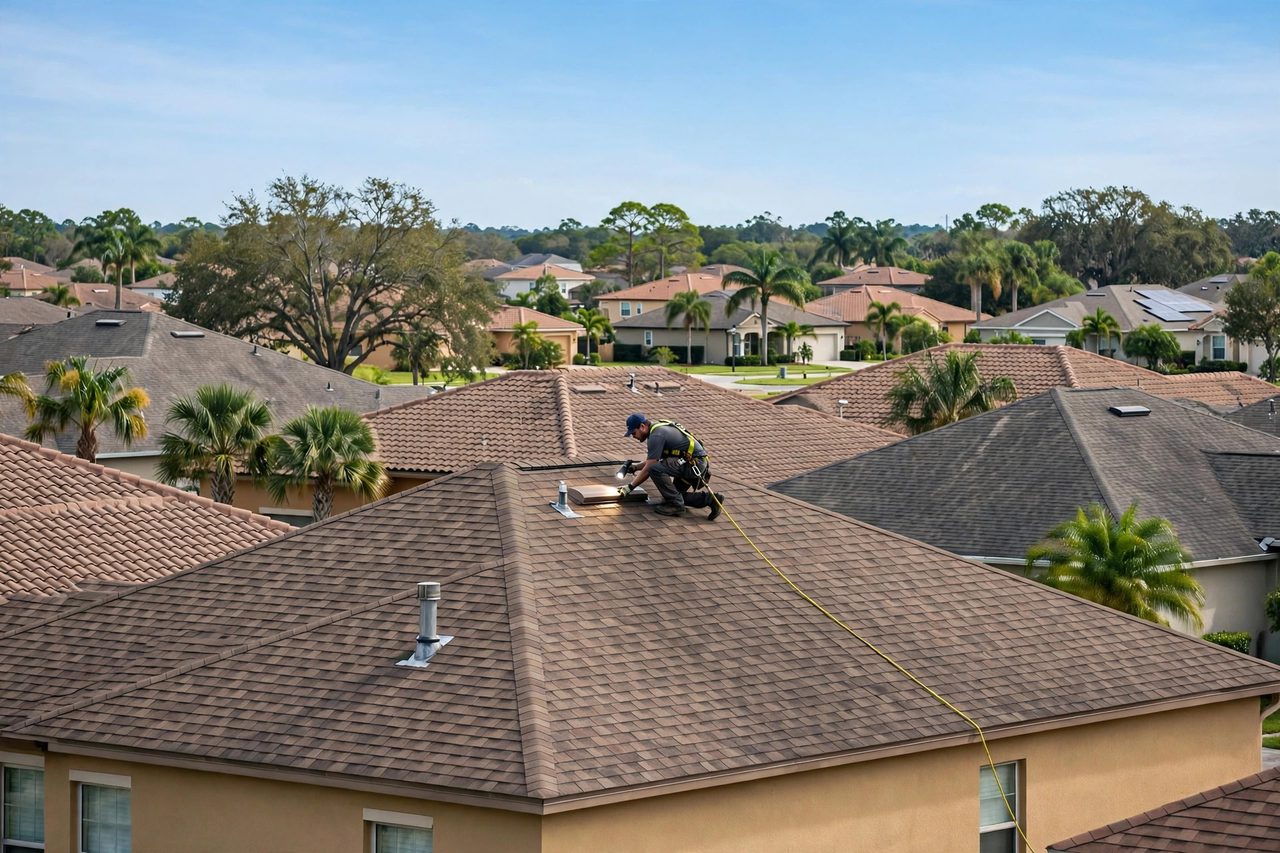
Roof Condition Assessment
Typical scope: inspect coverings, flashing, penetrations, drainage and visible moisture evidence before deciding what needs attention.
Image files include Orlando GPS metadata for local image organization; geotagging does not mean the scene was photographed at the listed map point.
How often should an Orlando roof get a professional inspection?
On a regular cycle, and always after a major storm. Annual inspections suit most Orlando homes, while roofs under heavy tree cover, older roofs and low-slope sections benefit from closer attention because debris, ponding and seal ageing move faster there. The rhythm matters more than any single visit: small findings stay small when they are caught yearly.
Is it safe to walk on my roof for maintenance?
Homeowner maintenance is ground-level by design. Walking a roof is a fall risk, foot traffic cracks tile, shingles scuff and lose granules in Florida heat, and a small slip can damage the very details you went up to check. Keep to perimeter walks, attic checks and binocular scans, and leave roof-surface work to professionals with the right access.
What should I photograph when I check my roof?
Photograph each slope from the ground, ridges and edges, any material found in the yard after storms, gutter overflow or sagging, and any new ceiling or attic stains, always with the date kept. That running record turns maintenance into evidence: it tracks change between inspections and supports insurance conversations if storm damage is ever disputed.
What Customers Have Shared
Customer feedback shown here is based on material already published by the business website. Use the Google Maps listing for the latest independently hosted review information.
“Showed up on time, and left the site cleaner than they found it.”
Published on the business website as customer feedback. See the live listing for additional review information.
View Google Maps Listing Leave a Google ReviewHow to evaluate a roofing contractor
Before authorizing work, compare the diagnosis, written scope, insurance documentation, applicable permits and contractor credentials. Ask which parts of the roof were inspected, what evidence supports the repair recommendation, and what documentation you will receive.
Need help with an active roofing problem?
Use this guide to understand the issue, then call to discuss the property and urgency.