
What Roof Flashing Problems Look Like in Orlando
Flashing manages transitions where the roof meets another material or a penetration. Small failures at these details can produce persistent leaks.
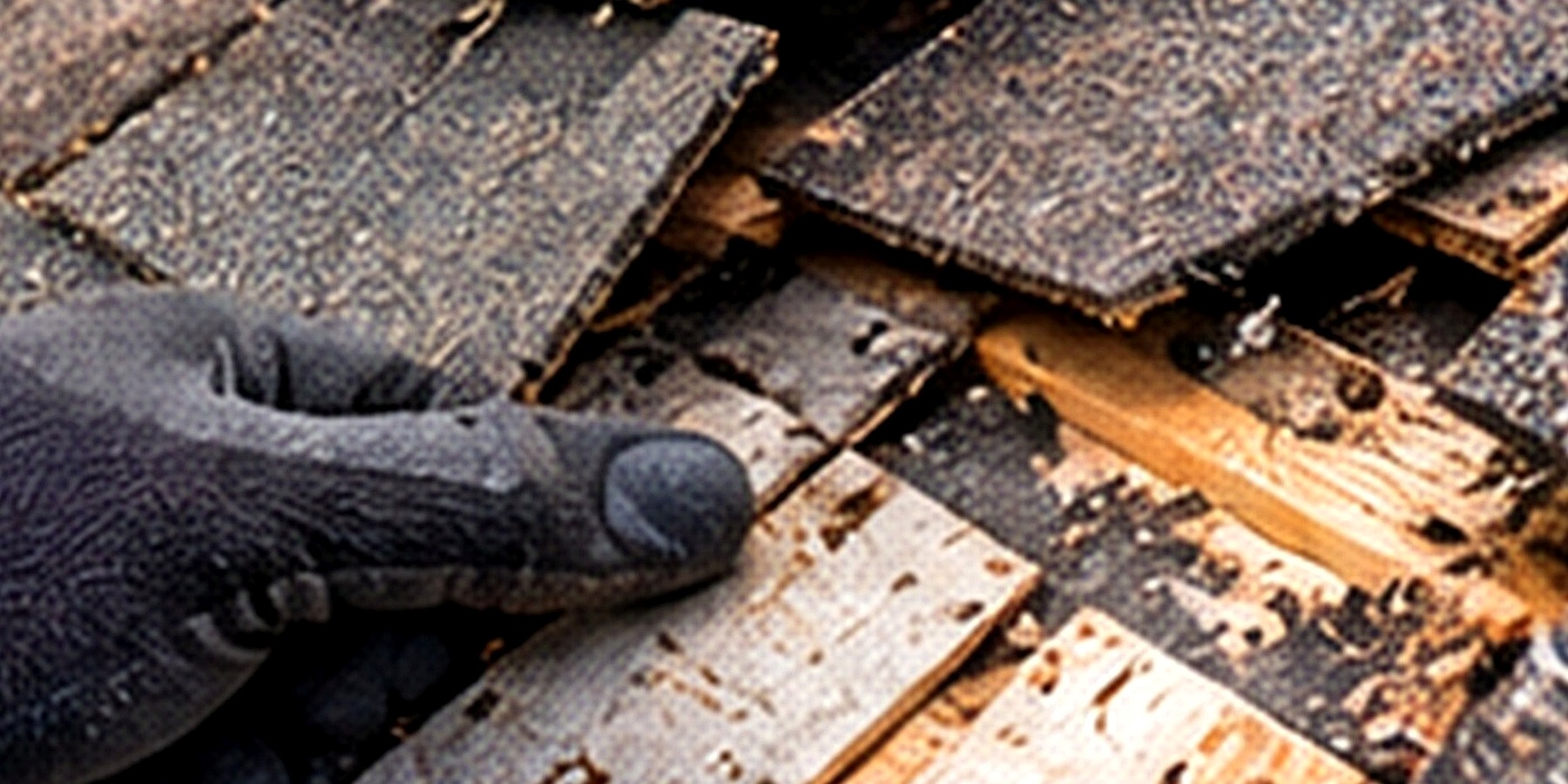
Flashing manages transitions where the roof meets another material or a penetration. Small failures at these details can produce persistent leaks.
For local homeowners, the useful approach is to connect the symptom to the roof component, explain the evidence that would confirm the diagnosis, and separate urgent action from long-term planning. This guide is written to help with that decision process.
Need local roofing help? Start with the Roof Repair Orlando FL homepage for Orlando roof repair services, emergency guidance and service-area information.
Short answer
Flashing is the metal system that seals every junction on a roof, chimneys, walls, valleys, skylights and vents, and it fails before the covering does because it flexes, corrodes and depends on correct layering. The visible signs are rust and lifting at joints, cracked sealant, and the classic symptom: a leak below a junction that keeps coming back after surface repairs.
How to recognise a flashing problem
Look for the pattern, not just the leak: stains that sit below a chimney, a sidewall or a valley line; leaks that recur at the same spot while the surrounding roof looks sound; visible rust streaks, lifted metal edges or sealant that has cracked and separated. Step flashing failures along walls often leak only in driven rain, because the overlap only fails when water is pushed upward. Valley problems frequently pair with debris: leaves dam the valley and water detours under the covering.
Flashing fails in specific ways, counter-flashing pulled from a chimney joint, step flashing installed over rather than under siding courses, corroded valley metal, sealant used as a substitute for metal. Each has a proper repair, which is why flashing repair starts by identifying which component failed rather than re-sealing the whole junction.
Why re-sealing keeps disappointing
Sealant on the surface is the repair most often sold and most often repeated: it bridges a joint that moves, in Florida sun that degrades sealant quickly, so the leak returns on a season's schedule. A proper flashing repair replaces failed metal and restores the overlaps that shed water, sometimes lifting adjacent covering courses to layer it correctly. When a quote does not say which of the two you are buying, ask, their lifespans differ by years, not months.
Junction leaks that have resisted two repairs deserve leak diagnostics to confirm the failed component before more money goes into the same junction. Skylight-specific failures are covered in the same visit family, via skylight repair.
Keep reading
What causes roof leaks in Orlando · Roof vent leaks and ventilation problems · Why skylights leak and how the repair actually works
Questions homeowners ask
Where is flashing on my roof?
Everywhere the roof changes direction or meets something: chimneys, walls, valleys, skylights, vents and roof-to-roof junctions. If a leak sits below one of those, flashing is the prime suspect.
Can flashing be replaced without redoing the whole roof section?
Usually yes: the adjacent covering courses are lifted, the metal replaced and layered correctly, and the covering reinstated. Full-section work is only needed when the surrounding covering has also failed.
Why does my chimney leak only in heavy rain?
Driven rain reaches higher up the junction and tests the overlaps harder. Intermittent junction leaks typically mean a specific flashing layer has failed, which is repairable once identified.
Before & After Repair Scenarios
These visuals are illustrative examples of common repair scopes, not representations of a specific customer job. Replace them with verified project photography when available.
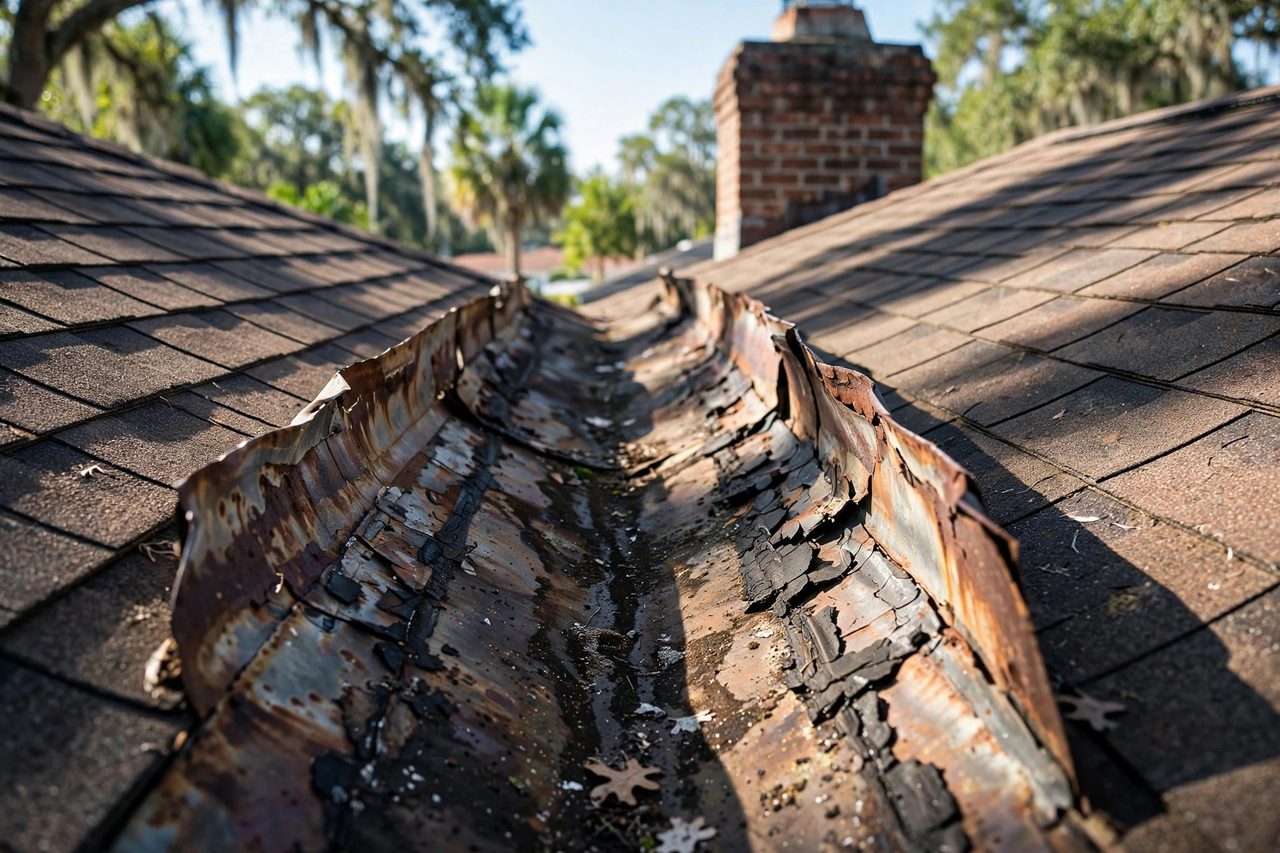
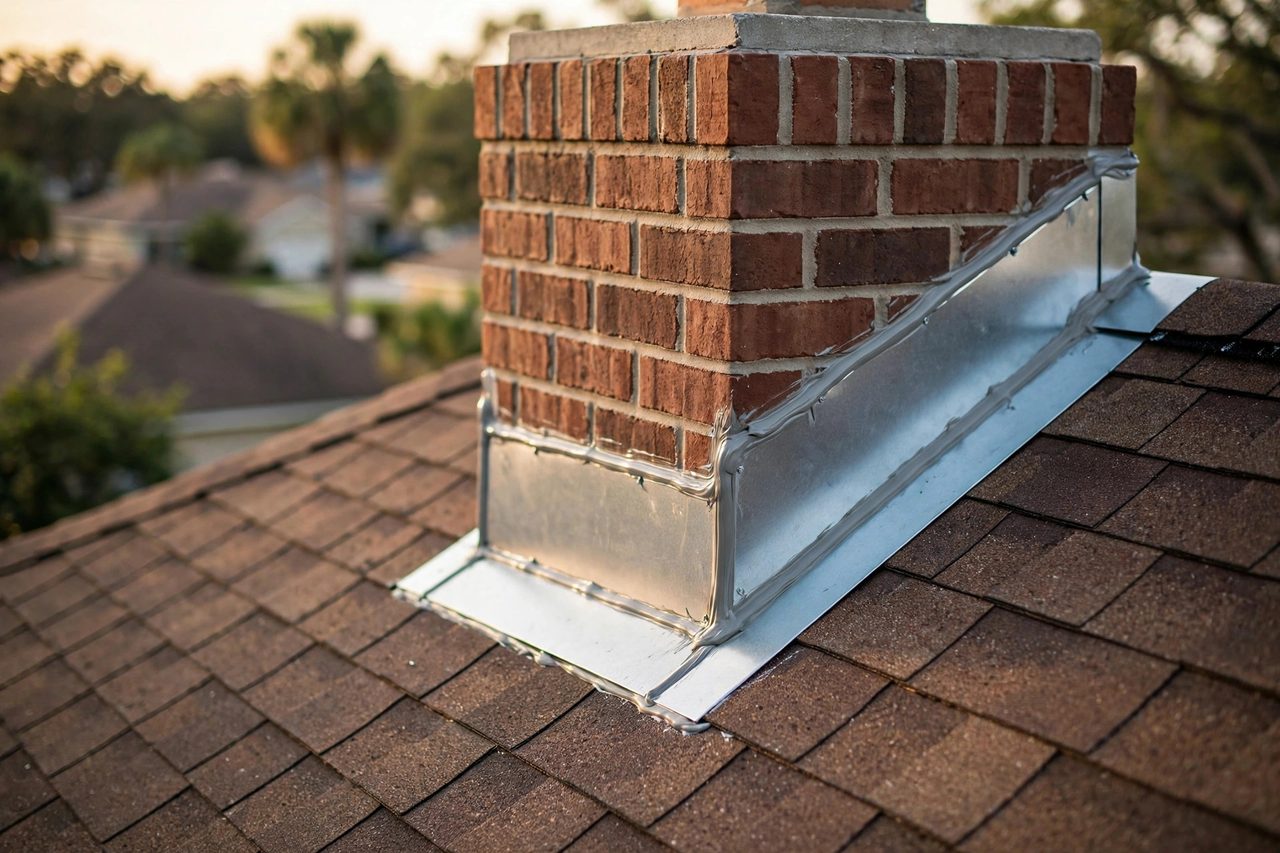
Localized Roof Leak Repair
Typical scope: identify the entry point, repair the failed component, restore surrounding materials and document the completed repair.
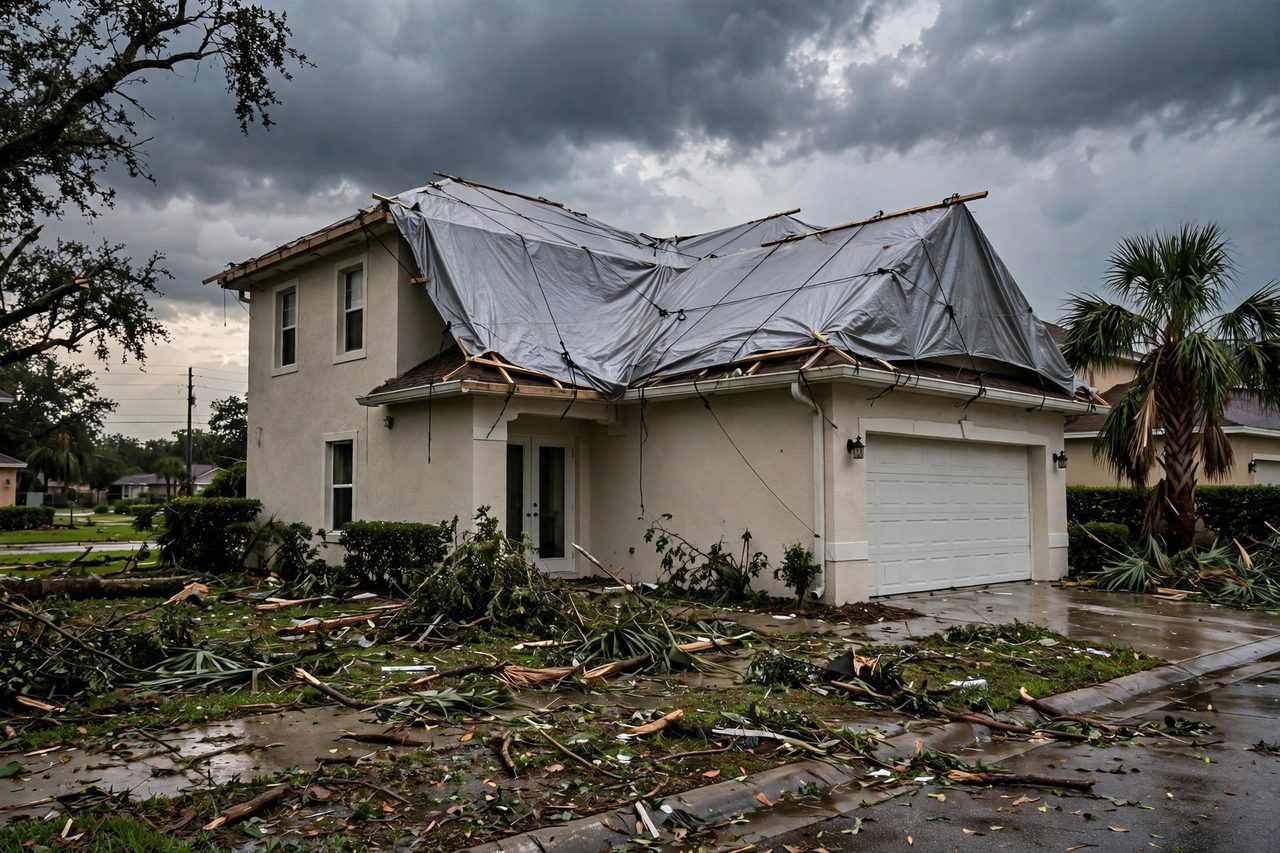
Storm Damage Stabilization
Typical scope: inspect wind or impact damage, protect exposed areas and separate urgent stabilization from permanent repairs.
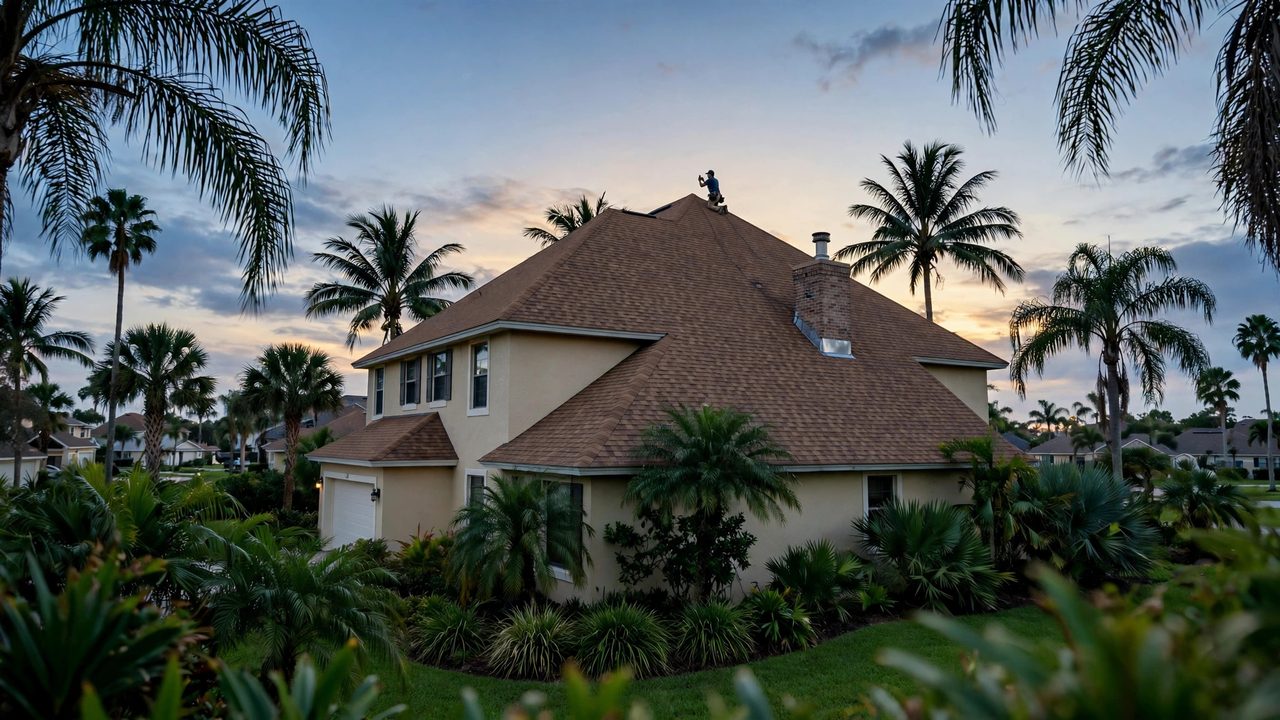
Roof Condition Assessment
Typical scope: inspect coverings, flashing, penetrations, drainage and visible moisture evidence before deciding what needs attention.
Image files include Orlando GPS metadata for local image organization; geotagging does not mean the scene was photographed at the listed map point.
How long does roof flashing last in Florida?
Flashing usually fails before the covering around it, because it flexes with temperature, corrodes in humid air and depends on sealant joints that Florida sun ages quickly. Lifespan varies with the metal used, the junction type and exposure, which is why inspections read flashing condition directly instead of assuming it matches the age of the roof.
What does a proper flashing repair actually involve?
It starts by identifying which component failed: step flashing, counter-flashing, valley metal or a penetration detail. The failed metal is removed and replaced, overlaps and layering are restored so water sheds correctly, and surrounding covering may need lifting to do it. Cost depends on the junction, access and how much covering has to come up.
Why does water stain the ceiling below a wall or valley line?
Walls and valleys are flashing territory. Step flashing along a wall can pass ordinary rain yet leak when storms drive water upward against its overlaps, and a debris-dammed valley detours water under the covering entirely. A stain that tracks a junction line, while the open roof around it looks sound, is the classic flashing signature.
What Customers Have Shared
Customer feedback shown here is based on material already published by the business website. Use the Google Maps listing for the latest independently hosted review information.
“Showed up on time, and left the site cleaner than they found it.”
Published on the business website as customer feedback. See the live listing for additional review information.
View Google Maps Listing Leave a Google ReviewHow to evaluate a roofing contractor
Before authorizing work, compare the diagnosis, written scope, insurance documentation, applicable permits and contractor credentials. Ask which parts of the roof were inspected, what evidence supports the repair recommendation, and what documentation you will receive.
Need help with an active roofing problem?
Use this guide to understand the issue, then call to discuss the property and urgency.