
Roof Leak or Condensation? How to Tell Before the Dry Season Starts
It is late October in Orlando. Nights are cooling into the upper 50s, days are still warm, and your air conditioner is still working hard. Then you notice it: a damp spot or drip on a ceiling, in a week with no rain. Your first thought is a roof leak, but this is condensation season in Central Florida, and the diagnosis matters: a roof repair will not fix a condensation problem, and a dehumidifier will not fix a roof leak.
Short answer
A roof leak and condensation can look almost identical from below, and in Florida humidity they are confused all the time. The simplest rule: a leak follows rain, while condensation follows humidity and cold surfaces, with no link to weather. The tests below help you tell which one you have before you pay for the wrong repair.
Why the two get confused in Florida homes
Florida homes live in a constant battle between indoor cool and outdoor moisture. Air conditioning chills ducts and vents, and warm humid air condenses on them. The result can be an active drip, a growing stain, or a musty patch that looks exactly like roof failure. October and November also bring some of the year's widest temperature swings in Orlando, so condensation problems spike right as storm season winds down, making it tempting to blame the roof.
It works the other way too. A small, slow roof leak can drip for weeks before anyone notices, and by the time a stain appears, the homeowner has run through every condensation theory. Both problems love the same territory: bathrooms, laundry rooms, and anywhere a vent or duct passes through the ceiling.
Signs that point to a real roof leak
A genuine roof leak usually leaves a pattern tied to water entering from above:
- It appears or grows after rain, especially heavy or wind-driven rain.
- It stays in one place and follows a roof feature above it: a chimney, vent pipe, skylight, or valley.
- The staining has yellow-brown edges.
- It can pause for weeks during dry weather and return with the next storm.
- In the attic, a wet spot on the deck or insulation traces a path back to one entry point.
If your stain matches this pattern, suspect failed flashing, a lifted shingle, or a cracked pipe boot. These do not heal on their own, and waiting only lets water do more work.
Signs that point to condensation
Condensation has its own fingerprints, and they tend to cluster around moisture sources and cold surfaces:
- The moisture appears with no rain, often on humid mornings, after hot showers, or when the AC is cycling hard.
- It shows up in several rooms at once, or as a broad damp area rather than one sharp stain.
- Bathroom fans vent into the attic instead of outside, a classic Florida setup that dumps moist air right under the roof deck.
- Ducts sweat. Droplets on ductwork or soaked duct insulation in the attic mean the roof may be fine.
- There is a musty smell without a clear stain, or paint bubbling on ceilings far from any roof penetration.
- The problem peaks when outdoor air is most humid and indoor air is coldest: a Florida October and November.
Condensation is a ventilation and airflow problem. It is real water, and it can grow real mold, but the fix is not on the roof surface.
A simple test you can run this week
You can separate the two causes with a notebook and one rain event. For the next week or two, note when you see moisture and what the weather did in the previous 24 hours. This week's forecast gives you natural test conditions: scattered showers through October 29, then sunny and cooler on October 30-31. Moisture that appears with the rainy days and quiets down in the dry spell points toward the roof. Moisture on humid mornings or after heavy AC use, with no rain at all, points toward condensation.
Two more checks help. In the attic, note whether the ductwork and vents are wet or only one deck area is wet. A single entry point with a traceable path means roof; broad dampness and sweating ducts mean condensation. Also check for moisture near a vented appliance: dryers, bathroom fans, and range hoods discharging into the attic are classic Orlando culprits.
When to call a roofer, and when to call an HVAC tech
If your test points to the roof, or you cannot tell, a roofer is the right first call. An honest roofer will examine every penetration and flashing point, and say so plainly if the roof is fine and the problem is airflow. If the roof checks out, an HVAC professional can address duct sweating, vent routing, and attic ventilation. Many Orlando homes have a little of both: a roof past its best year and an attic that breathes poorly. A free inspection costs you nothing and tells you which side of the line your problem falls on. Florida roofing licence CCC1327217, Timothy Parks Roofing & Construction Inc.
Keep reading
What Causes Roof Leaks in Orlando? · Signs of Water Damage in the Attic
Questions homeowners ask
Can condensation really drip like a leak?
Yes. When warm humid air meets a cold surface, the water that forms can drip steadily, soak drywall, and stain ceilings just like a roof leak. Sweating ducts and unvented bathroom fans are the most common causes in Florida homes.
How do I know if a ceiling stain is new or old?
New stains are darker, and the drywall may still feel soft or cool. Old, inactive stains are lighter and the drywall feels dry and firm. A stain that grows, darkens after rain, or changes shape is active and needs attention now, regardless of the cause.
Does condensation mean my roof is fine?
Not necessarily. The two problems are independent, and a roof can fail quietly while the condensation gets the blame. If your roof is old or went through a rough storm season, have it inspected even if condensation seems likely.
Who should I call first if I cannot tell?
Call a roofer for a free inspection. A professional will examine the roof, penetrations, and flashing, and say so plainly if the roof is not the source.
A growing ceiling stain is a message, but not always from the roof. Before the dry season starts, get an answer you can trust. Request a free roof inspection in Orlando: call (689) 282-5370 or visit roofrepairorlandofl.com. Licensed Florida roofing: Timothy Parks Roofing & Construction Inc., licence CCC1327217.
Before & After Repair Scenarios
These visuals are illustrative examples of common repair scopes, not representations of a specific customer job. Replace them with verified project photography when available.
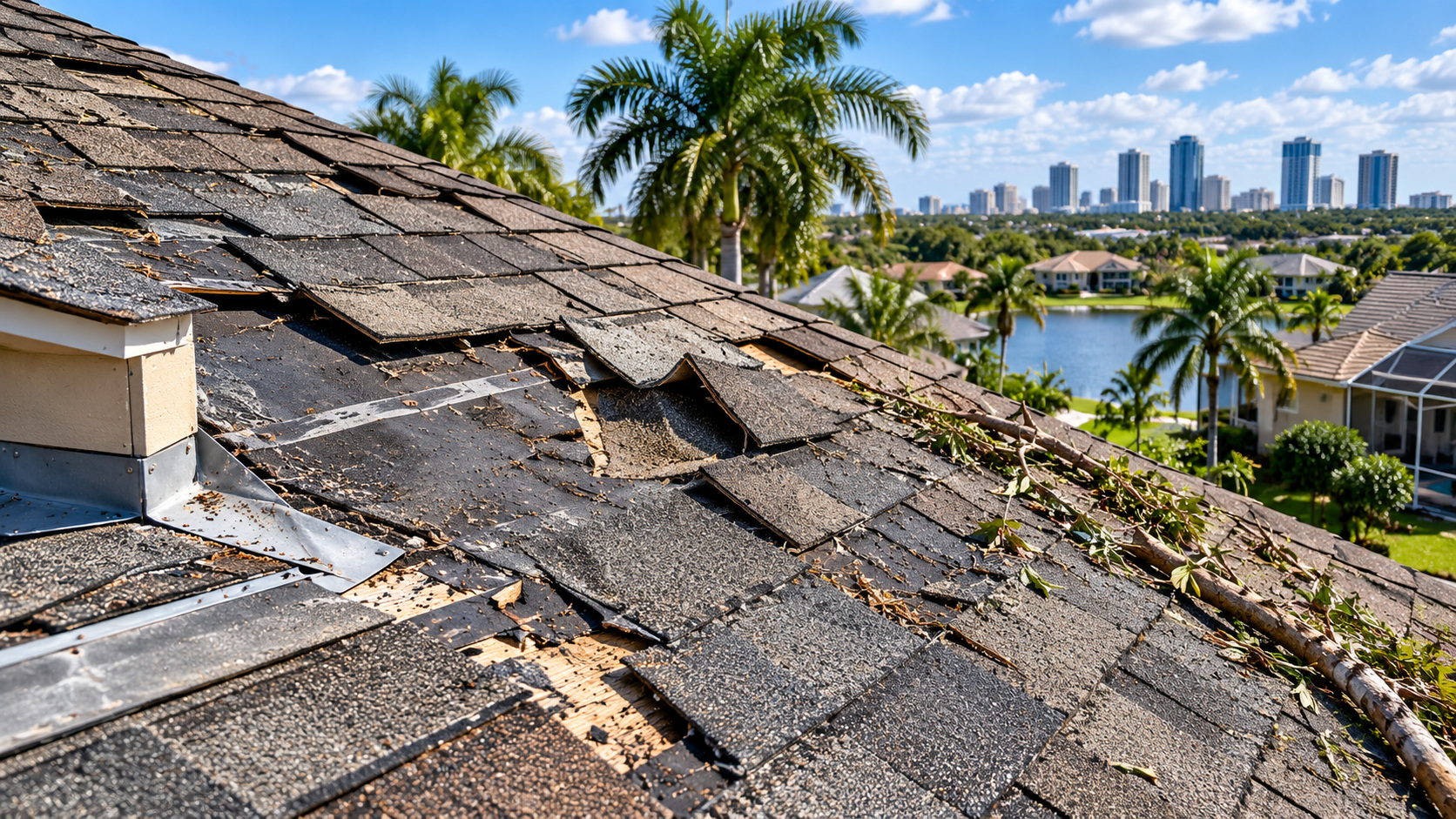

Localized Roof Leak Repair
Typical scope: identify the entry point, repair the failed component, restore surrounding materials and document the completed repair.
Storm Damage Stabilization
Typical scope: inspect wind or impact damage, protect exposed areas and separate urgent stabilization from permanent repairs.

Roof Condition Assessment
Typical scope: inspect coverings, flashing, penetrations, drainage and visible moisture evidence before deciding what needs attention.
Image files include Orlando GPS metadata for local image organization; geotagging does not mean the scene was photographed at the listed map point.
What Customers Have Shared
Customer feedback shown here is based on material already published by the business website. Use the Google Maps listing for the latest independently hosted review information.
“Showed up on time, and left the site cleaner than they found it.”
Published on the business website as customer feedback. See the live listing for additional review information.
View Google Maps ListingHow to evaluate a roofing contractor
Before authorizing work, compare the diagnosis, written scope, insurance documentation, applicable permits and contractor credentials. Ask which parts of the roof were inspected, what evidence supports the repair recommendation, and what documentation you will receive.
Need help with an active roofing problem?
Use this guide to understand the issue, then call to discuss the property and urgency.