
How to Handle Roof Tarping After a Storm
Emergency tarping is temporary weather protection. It can reduce further exposure while a permanent repair is assessed and scheduled.
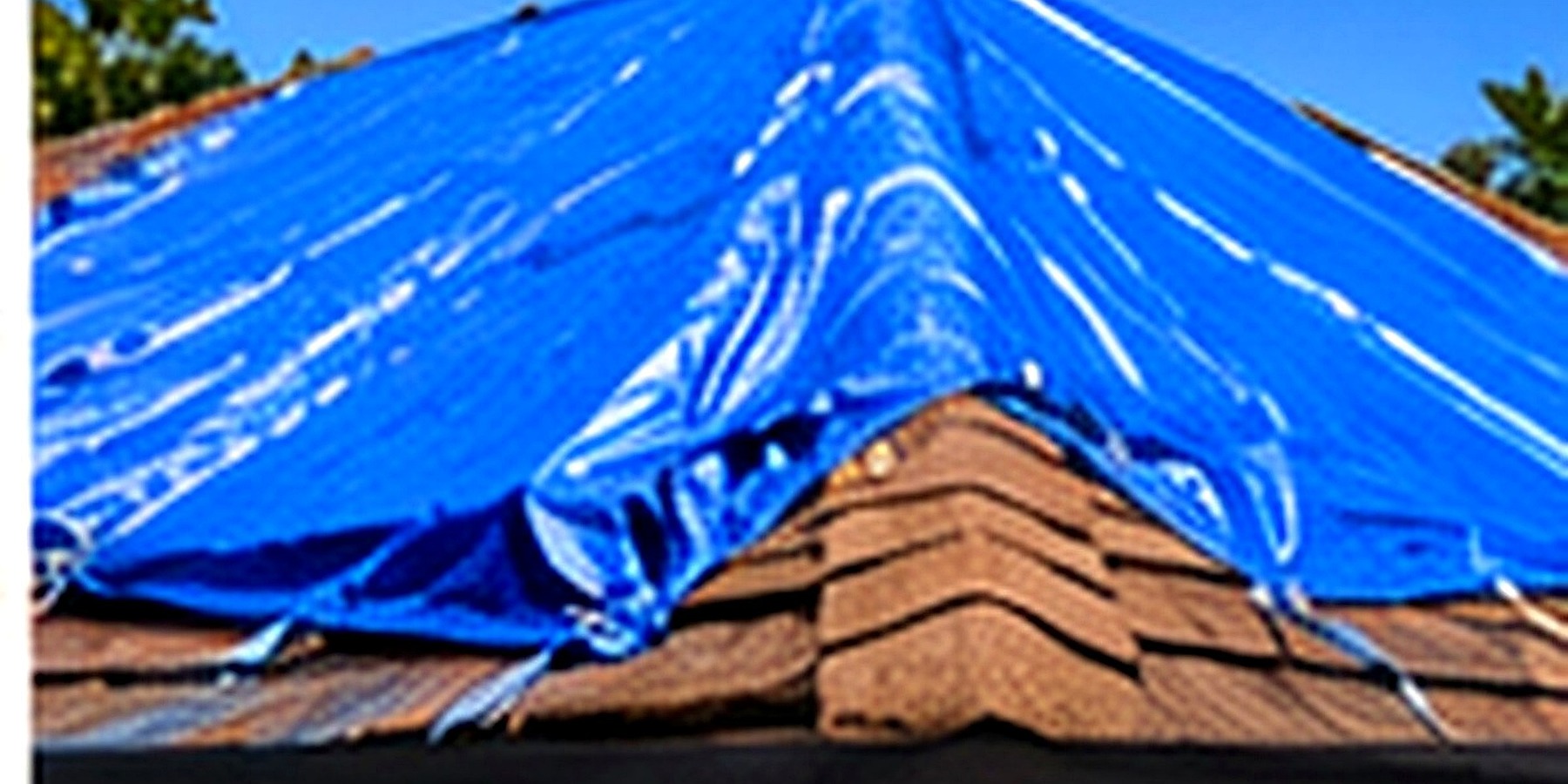
Emergency tarping is temporary weather protection. It can reduce further exposure while a permanent repair is assessed and scheduled.
For local homeowners, the useful approach is to connect the symptom to the roof component, explain the evidence that would confirm the diagnosis, and separate urgent action from long-term planning. This guide is written to help with that decision process.
Need local roofing help? Start with the Roof Repair Orlando FL homepage for Orlando roof repair services, emergency guidance and service-area information.
Short answer
A roof tarp is temporary weather protection installed over storm damage to stop further water entry until a permanent repair can be scoped and done. It is not a repair, it has a short working life measured in weeks, and it only helps if it is anchored and lapped correctly, a loose tarp in the next storm can do more damage than the opening it covers. The goal of tarping is to buy a dry, documented interval, not to close the problem.
What good tarping involves
A proper installation covers the damaged area with margins onto sound roof, is secured so wind cannot get under its edges (anchoring boards or approved fastening rather than a few nails through the tarp alone), and is arranged to shed water downhill over, not into, the laps below. The damage is photographed before the tarp goes on, because once covered, the evidence insurers and scopes rely on is hidden, the documentation sequence matters and is detailed in roof repair insurance documentation.
The service route is emergency roof tarping, usually as part of emergency roof repair. Installation waits for safe conditions: a wet, windy roof endangers the installer, and interior protection covers your home in the interval.
Life under a tarp: the rules
Treat the tarp as a countdown. Sun degrades tarp material, edges work loose, and water finds any reverse lap, so the permanent repair scope should be agreed while the tarp is fresh, not after it fails. Check from the ground after each subsequent storm for billowing or displaced edges, and report them rather than climbing up to adjust them yourself.
When the permanent scope is storm damage, it routes to storm damage roof repair. If the damage turns out to be a single component failure rather than storm opening, ordinary repair routes apply, the assessment under the tarp decides, and that assessment should be in writing.
Keep reading
Emergency roof repair: first steps · What to do about a missing shingle after a storm
Questions homeowners ask
How long can a tarp stay on my roof?
Weeks, not months: material degrades in sun and fastenings loosen. Its purpose is to protect the property while the permanent repair is documented, scoped and scheduled.
Should I tarp my own roof after a storm?
The strong recommendation is no: storm-damaged wet roofs are a leading setting for serious falls. Photograph from the ground, protect the interior, and let equipped professionals handle roof access.
Does a tarp stop all water entry?
A correctly installed tarp over the damaged area sheds the great majority of rain. Driving rain at edges can still find paths, which is one more reason the permanent repair should not drift.
Before & After Repair Scenarios
These visuals are illustrative examples of common repair scopes, not representations of a specific customer job. Replace them with verified project photography when available.
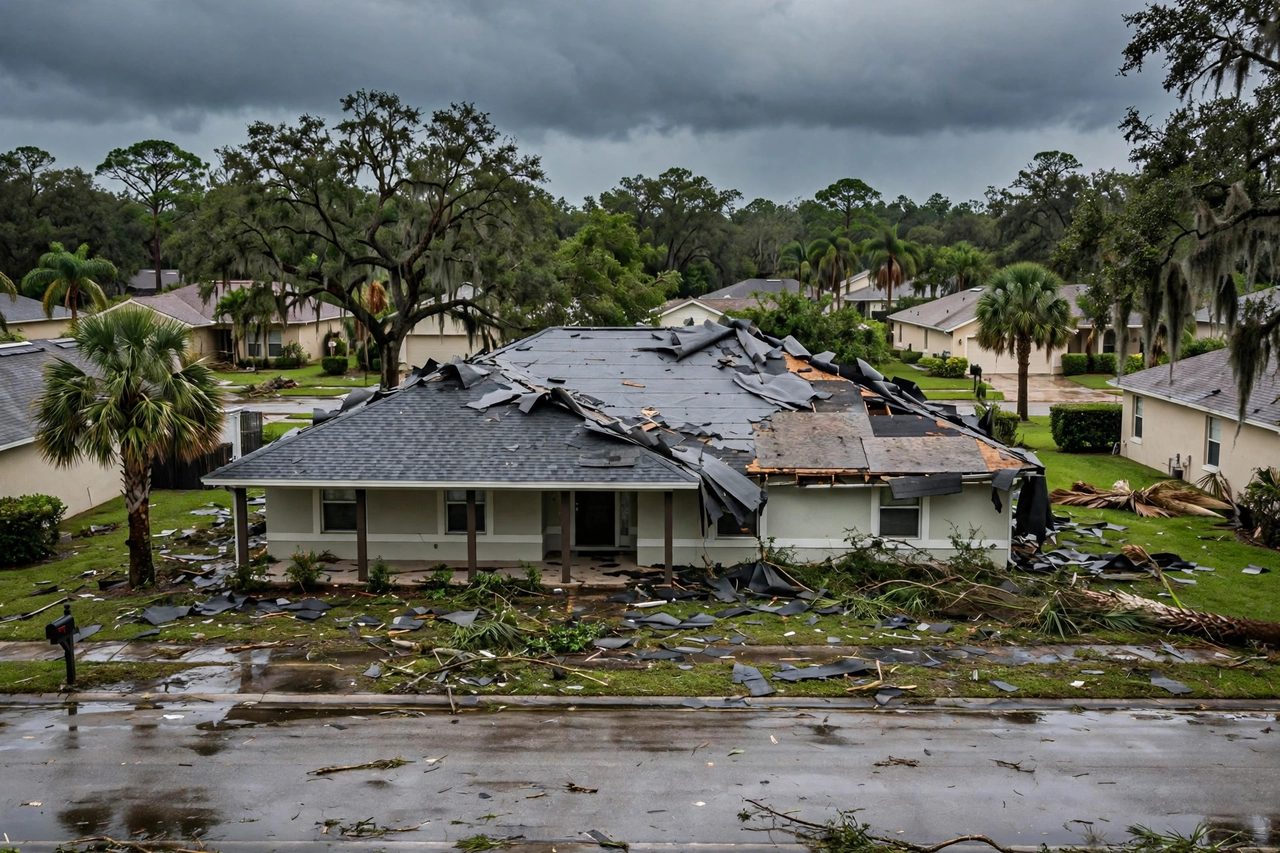
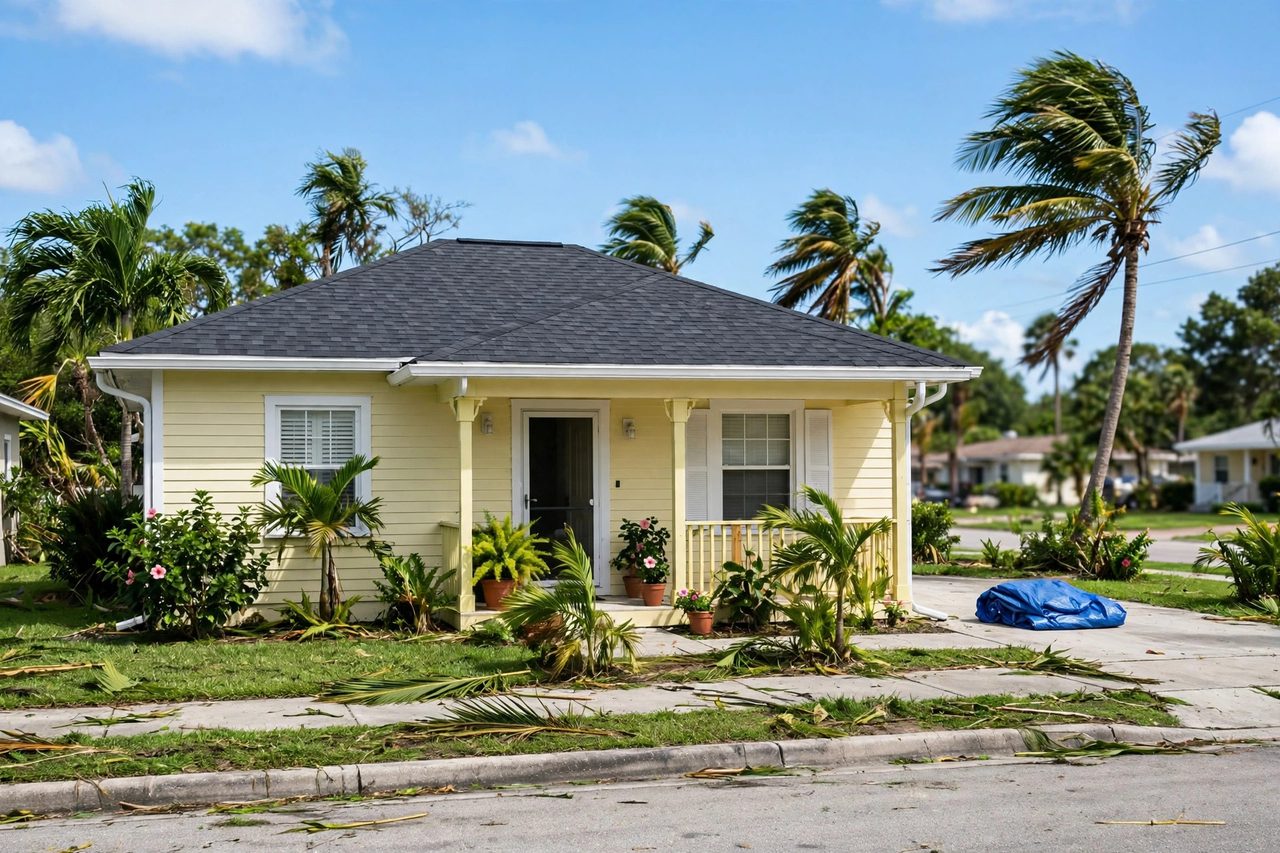
Localized Roof Leak Repair
Typical scope: identify the entry point, repair the failed component, restore surrounding materials and document the completed repair.
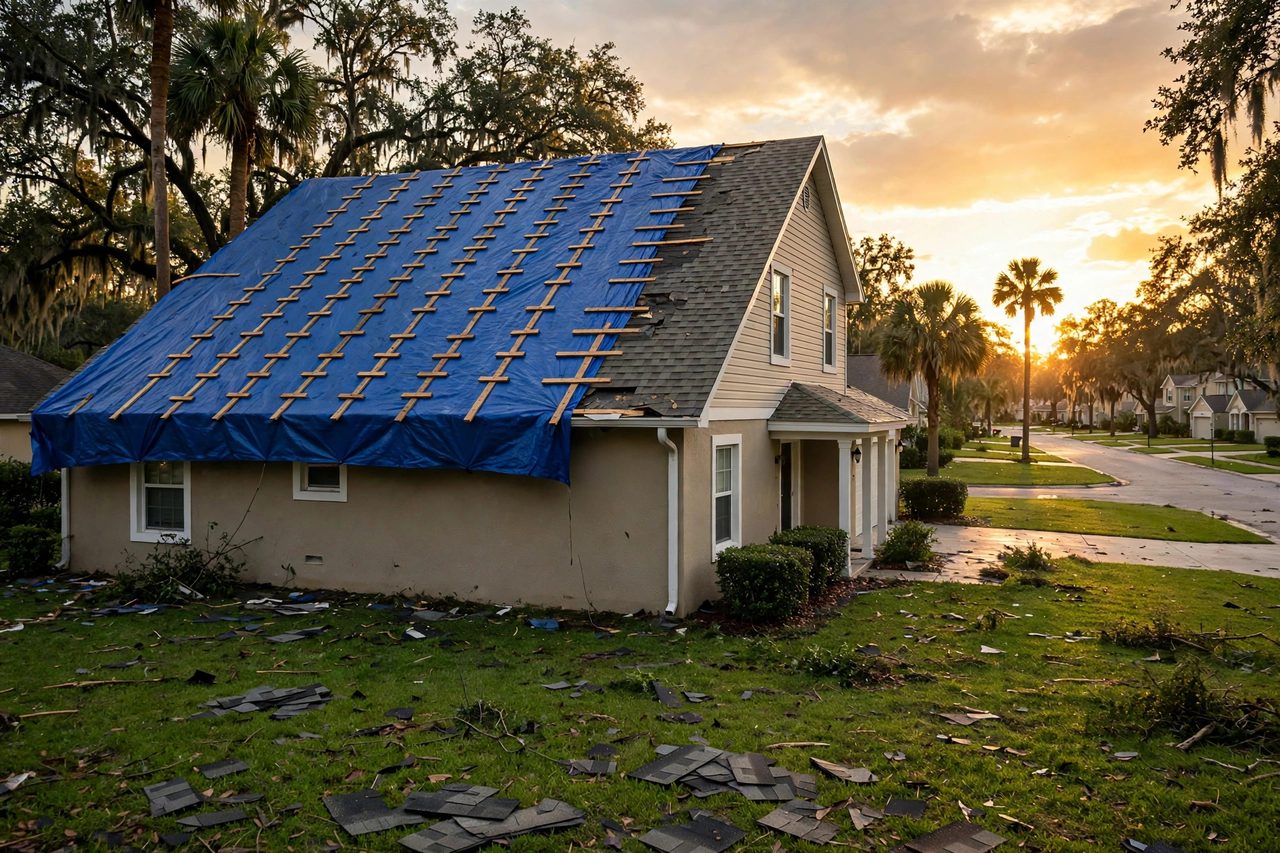
Storm Damage Stabilization
Typical scope: inspect wind or impact damage, protect exposed areas and separate urgent stabilization from permanent repairs.
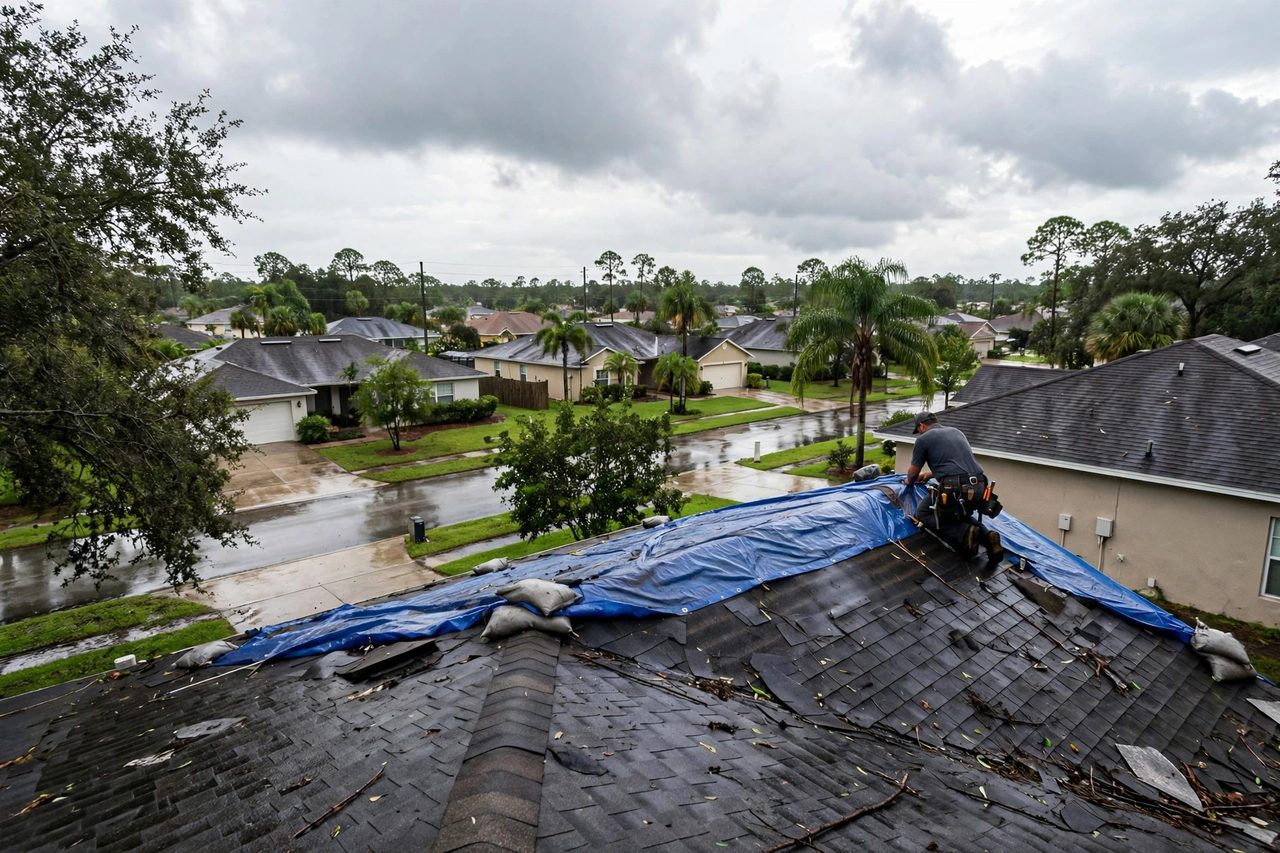
Roof Condition Assessment
Typical scope: inspect coverings, flashing, penetrations, drainage and visible moisture evidence before deciding what needs attention.
Image files include Orlando GPS metadata for local image organization; geotagging does not mean the scene was photographed at the listed map point.
Will a tarp damage my shingles or tiles?
A properly installed tarp should not. Good crews secure tarps with furring strips screwed into rafters or use sandbags on tile, rather than nailing randomly through the roof surface. Ask how the tarp will be anchored before work starts, because careless fastening can create new leak points around the original damage.
What happens if heavy rain comes again while the tarp is on?
A well fitted tarp should shed ordinary rain, but wind driven rain can work under edges, and a shifted or torn tarp can let water back in quickly. After any strong wind, check from the ground whether the tarp has moved, and call the installer back if corners are flapping or lifted.
What does professional roof tarping cost in Orlando?
Cost depends on the size of the damaged area, roof height and pitch, how safely the crew can access it, and whether the call comes during a storm emergency. A written quote after a quick assessment is the reliable route, and tarping invoices are worth keeping for your insurance documentation file.
What Customers Have Shared
Customer feedback shown here is based on material already published by the business website. Use the Google Maps listing for the latest independently hosted review information.
“Showed up on time, and left the site cleaner than they found it.”
Published on the business website as customer feedback. See the live listing for additional review information.
View Google Maps Listing Leave a Google ReviewHow to evaluate a roofing contractor
Before authorizing work, compare the diagnosis, written scope, insurance documentation, applicable permits and contractor credentials. Ask which parts of the roof were inspected, what evidence supports the repair recommendation, and what documentation you will receive.
Need help with an active roofing problem?
Use this guide to understand the issue, then call to discuss the property and urgency.