
Roof Damage from a Fallen Tree
A fallen tree can damage the roof covering, deck, framing and interior at the same time. The first priority is safe stabilization and documentation.

A fallen tree can damage the roof covering, deck, framing and interior at the same time. The first priority is safe stabilization and documentation.
For local homeowners, the useful approach is to connect the symptom to the roof component, explain the evidence that would confirm the diagnosis, and separate urgent action from long-term planning. This guide is written to help with that decision process.
Need local roofing help? Start with the Roof Repair Orlando FL homepage for Orlando roof repair services, emergency guidance and service-area information.
Short answer
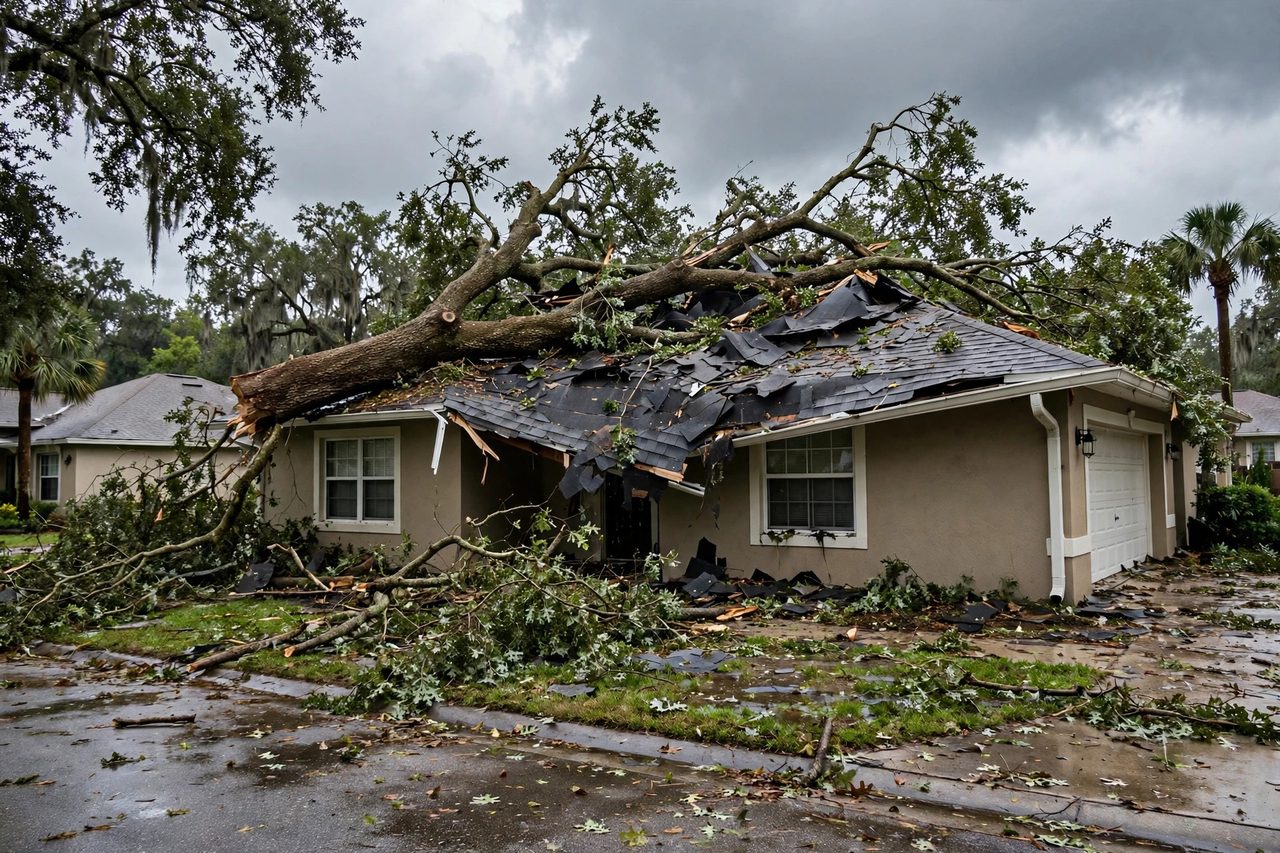
A fallen tree on a roof is a safety and structure problem before it is a roofing problem: keep people out of the rooms below the impact, treat any sagging ceiling as a warning, and do not let anyone walk the roof until the structure is assessed. Tree removal, temporary protection and roof repair are three separate scopes that follow in that order, and photographing the scene dated and from the ground is the first useful thing an owner can do.
Sequence: safety, tree, structure, roof
If the tree has broken through, assume the load is still moving and the structure is compromised: the impact zone is not a place for inspection by occupants. A tree service removes the load, usually in sections, sometimes with a crane; only then can the decking, rafters and covering be assessed honestly. Water entry in the meantime is managed from inside (containers, protection) and, once the tree is off and conditions allow, by emergency tarping over the opening.
The roofing scope that follows can range from a localised deck-and-covering repair to structural carpentry plus a slope rebuild; any quote given before the tree is removed is a guess, and you should treat it as one. The route for the assessed work is storm damage roof repair, with wood damage handled under the same family's carpentry repairs.
Documentation for a tree claim
Photograph the tree, the impact area and interior damage from safe positions, with dates; keep the tree-service invoice and any emergency-protection invoices together. Insurers treat tree impact as a defined event, and the file you build in the first days is the file the claim runs on, the full record list is in roof repair insurance documentation. No roofer can promise how a claim will be decided; what they can provide is a clean, dated, component-level damage description.
Prevention belongs in calmer weather: the pre-season routine in hurricane roof preparation includes exactly the tree-trimming step that prevents the most common version of this event.
Keep reading
Roof repair insurance documentation: what to keep · How to handle roof tarping after a storm
Questions homeowners ask
Can the roofer remove the tree as well?
Tree removal is a separate trade with its own equipment and insurance. Roofers typically sequence after the tree service; anyone offering both should be able to show they are equipped and insured for the tree work specifically.
The tree only dented the roof without breaking through. Is that serious?
It can be: impact can crack decking, break tile and disturb flashing without an obvious hole. A roof-level assessment after removal of the load is the way to know, and the impact area deserves one even without a leak.
Should I wait for my insurer before removing the tree?
Safety and further-damage prevention come first; insurers generally expect owners to mitigate. Photograph thoroughly before removal, keep invoices, and notify promptly, and read your own policy's duties rather than relying on general advice.
Before & After Repair Scenarios
These visuals are illustrative examples of common repair scopes, not representations of a specific customer job. Replace them with verified project photography when available.
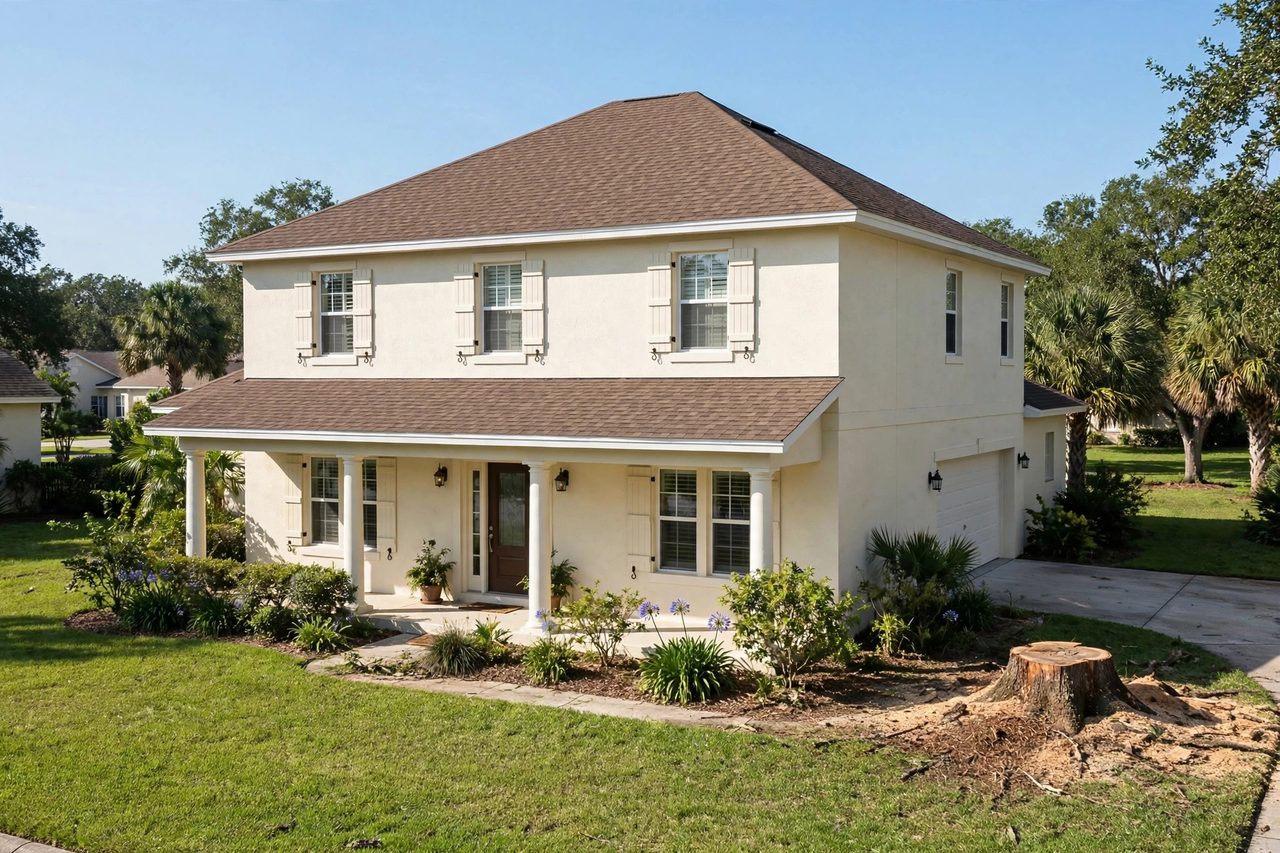
Localized Roof Leak Repair
Typical scope: identify the entry point, repair the failed component, restore surrounding materials and document the completed repair.
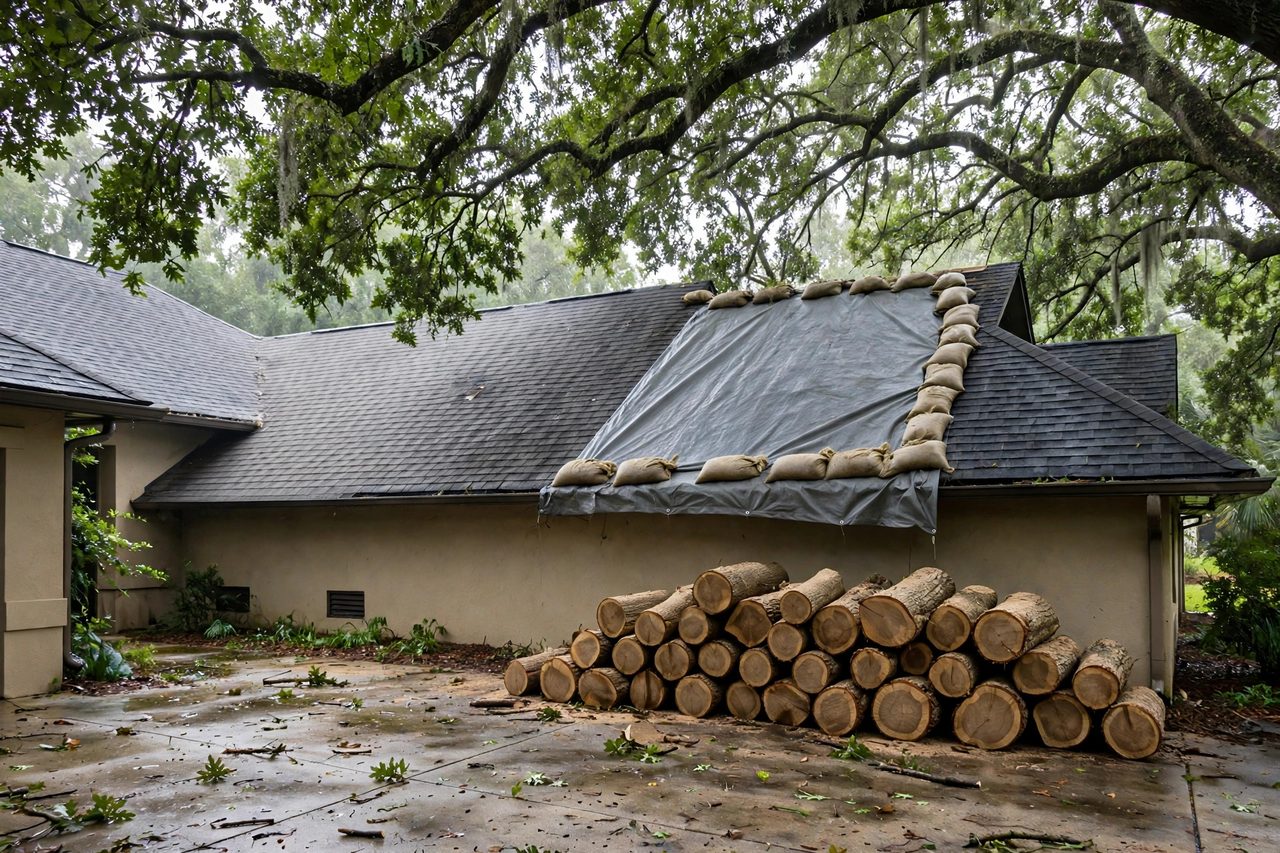
Storm Damage Stabilization
Typical scope: inspect wind or impact damage, protect exposed areas and separate urgent stabilization from permanent repairs.
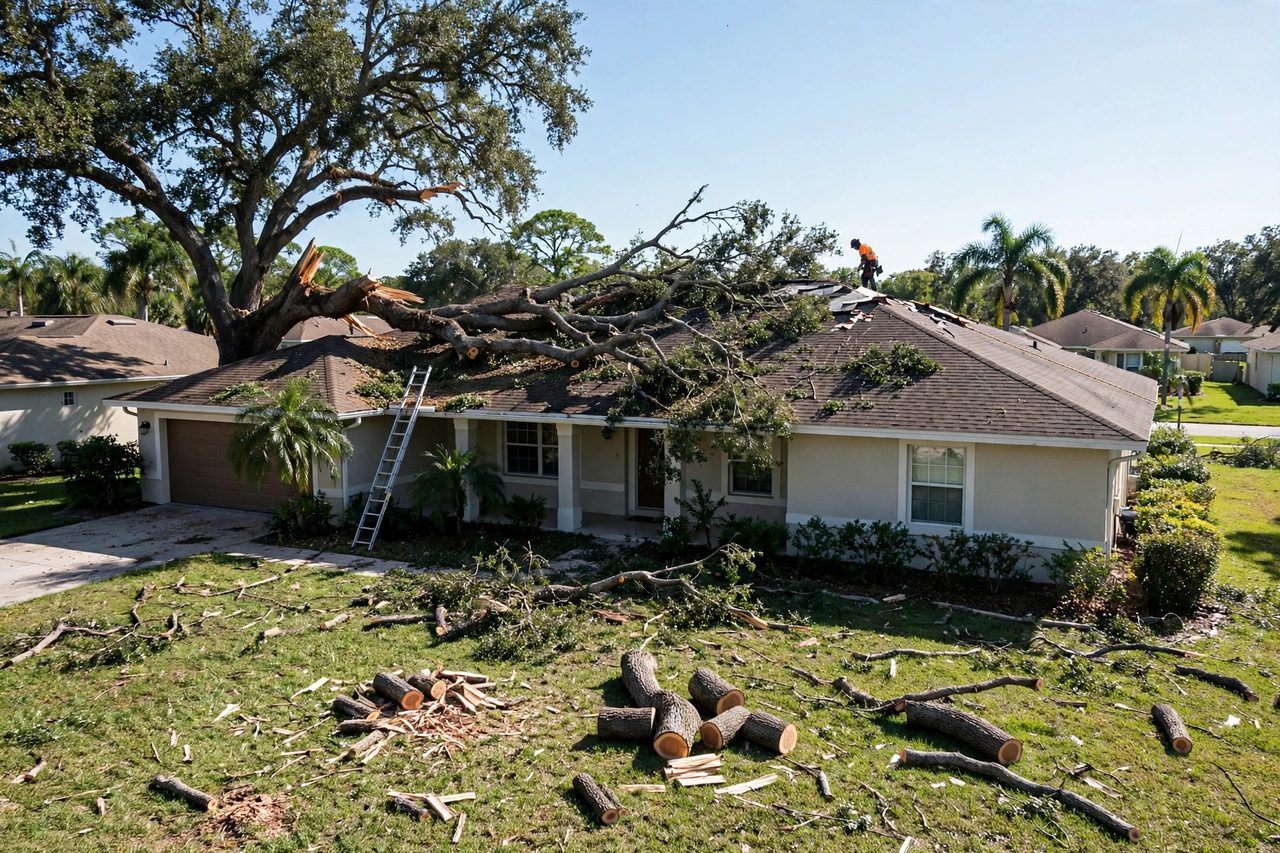
Roof Condition Assessment
Typical scope: inspect coverings, flashing, penetrations, drainage and visible moisture evidence before deciding what needs attention.
Image files include Orlando GPS metadata for local image organization; geotagging does not mean the scene was photographed at the listed map point.
Who should I call first when a tree falls on my roof?
Call emergency services first if anyone is hurt, wires are down or the structure looks unstable. Then a tree service removes the load, because roofers cannot assess or repair honestly under a tree. Photograph the scene from the ground with dates as soon as it is safe, and keep people out of the rooms below the impact.
Can a tarp be installed while the tree is still on the roof?
Generally no, and it should not be attempted. The load may still be shifting and the structure beneath it is compromised, so the impact zone is unsafe to walk or anchor a tarp to. Tarping follows tree removal and a structural look; meanwhile, manage water from inside with containers and protection over belongings and flooring.
What paperwork should I keep for a fallen tree insurance claim?
Keep one file: dated photographs of the tree, the impact area and interior damage, the tree-service invoice, any emergency tarping or protection invoices, and the roofer's written assessment once the tree is off. Insurers treat tree impact as a defined event, and a complete first-day file makes the damage scope far easier to establish later.
What Customers Have Shared
Customer feedback shown here is based on material already published by the business website. Use the Google Maps listing for the latest independently hosted review information.
“Showed up on time, and left the site cleaner than they found it.”
Published on the business website as customer feedback. See the live listing for additional review information.
View Google Maps Listing Leave a Google ReviewHow to evaluate a roofing contractor
Before authorizing work, compare the diagnosis, written scope, insurance documentation, applicable permits and contractor credentials. Ask which parts of the roof were inspected, what evidence supports the repair recommendation, and what documentation you will receive.
Need help with an active roofing problem?
Use this guide to understand the issue, then call to discuss the property and urgency.